

In every boom, investors hunt for the “safe” end of the trade. In a gold rush, you buy the people selling pickaxes. In the AI rush, that has meant the firms selling compute.
AI infrastructure is not a pickaxe business. It is an airline business. When demand is hot, planes print money. When demand cools, the fleet still depreciates.
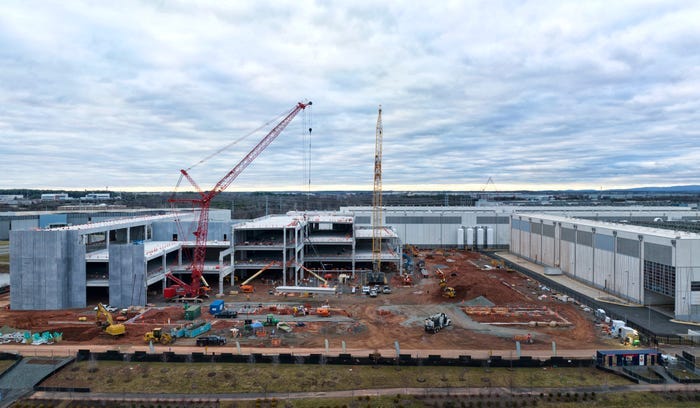
Three companies capture the uncomfortable math: CoreWeave, Nebius, and IREN. Each is trying to turn scarce GPUs and scarce megawatts into contracted revenue. Each is also offering investors a concentrated dose of the one risk the AI narrative keeps skipping: technological obsolescence.
The market prices them like momentum vehicles, not sleepy utilities. On January 1, 2026, Nebius traded around $83.71, IREN around $37.77, and CoreWeave around $71.61. The numbers matter less than what they imply. These are leveraged expressions of optimism about a technology stack that can reset every 12 to 24 months.
The hyperscalers are renting on purpose
The strangest feature of the moment is that the biggest technology firms are acting like cautious renters.
Microsoft has Azure, yet it still buys specialist GPU capacity. CoreWeave’s customer concentration shows how lopsided this can get, with one customer representing the majority of revenue and the top two making up most of the rest. Nebius, for its part, signed a multi-year deal to supply Microsoft with GPU infrastructure capacity measured in the tens of billions of dollars.
Why rent when you can build?
Speed is one answer. Contracts can conjure capacity faster than permits, transformers, construction crews, and utility upgrades.
Risk management is the better answer.
Owning AI infrastructure means taking two bets at once. One: demand stays durable. Two: the gear stays economically useful long enough to earn back its cost. In normal enterprise IT, that second bet is manageable. In frontier AI, it is the whole game.
Depreciation is the business model
Nebius’s numbers show the shape of this trade. Revenue can look small next to capital spending. Hardware depreciation runs like a tax on the income statement, and it does not care whether customers are thrilled this quarter.
This is the core operating reality: huge cash outlays up front, followed by a race to keep the boxes full before the next generation arrives and resets pricing power.
CoreWeave is the same story with more scale and sharper edges. Revenue growth can be explosive, and losses can still be enormous. Heavy interest expense and large debt balances add a timetable to the narrative. When sentiment is buoyant, debt is an accelerant. When sentiment turns, debt becomes a countdown clock.
IREN adds another layer of cyclicality because it comes from bitcoin mining, a business that already knows what it feels like when yesterday’s machines become scrap. The pitch is a pivot: from mining rigs to AI racks, from a token tied to a commodity price to a compute-hour that still behaves like a commodity.
Compute is turning into a tradable product
All three firms sell a product that looks similar across providers: access to Nvidia GPUs attached to power, networking, and cooling.
That sameness is the problem.
Compute is becoming tradable. New suppliers keep showing up, including owners of capital and land who have noticed the spreads. When long-duration infrastructure money decides a market is attractive, returns tend to migrate toward the cost of capital.
Even Nvidia’s behavior hints at fragility in timing. Deals that give Nvidia access to customers’ unsold capacity can be read two ways. They can be ecosystem strategy. They can also be insurance against too much capacity arriving at once.
The underpriced risk is a platform shift
The industry talks about “the next GPU” as if it is simply faster. In practice, each jump can change the physical plant.
Moving from one density regime to the next is not a software update. Rack-scale, liquid-cooled designs force changes in plumbing, pumps, facility layouts, and supply chains. A data hall built for one generation does not effortlessly become the next.
And Nvidia is not the only path.
Amazon pushes Trainium. Google sells TPU capacity. Microsoft is developing its own accelerators. If alternative silicon meaningfully improves cost per token, the migration can be abrupt. Model developers do not worship any one chip. They worship unit economics.
Training is expensive. Inference is ruthless.
A small cost advantage, multiplied by billions of queries, becomes gravity.
This is another reason the hyperscalers like renting. Renting turns an existential technology bet into a portfolio of contracts. If the platform shifts, the tenant can renegotiate, reroute workloads, or simply not renew. The landlord is the one left holding a building full of last year’s state of the art.
How the cycle turns
A cooling in the AI hype cycle does not require AI to fail. It just requires expectations to fall faster than utilization can be defended.
When that happens, the sequence is simple.
Contract expansions slow. Customers demand flexibility. GPU hours get discounted. Depreciation does not. Interest does not. Equity absorbs the first punch.
None of this implies these firms are foolish. They are responding to what the market rewards: build fast, sign long, scale ahead of demand. They may succeed on their own terms.
Investors just need to understand what they are buying.
Owning AI infrastructure is not owning picks and shovels. It is owning the mine, the trucks, and the debt, and hoping the geology does not change.
IREN 0.00%↑
CRWV 0.00%↑
NBIS 0.00%↑
Disclaimer:
All views expressed are my own and are provided solely for informational and educational purposes. This is not investment, legal, tax, or accounting advice, nor a recommendation to buy or sell any security. While I aim for accuracy, I cannot guarantee completeness or timeliness of information. The strategies and securities discussed may not suit every investor; past performance does not predict future results, and all investments carry risk, including loss of principal.
I may hold, or have held, positions in any mentioned securities. Opinions herein are subject to change without notice. This material reflects my personal views and does not represent those of any employer or affiliated organization. Please conduct your own research and consult a licensed professional before making any investment decisions.