

Modern AI data centers are hitting a wall. Traditional copper wires simply cannot handle the power and complexity of new artificial intelligence systems. To keep growing, the industry has to move data using light.
GlobalFoundries saw this coming. Over the last few years, the company stepped back from the crowded traditional chip market to become the world’s largest pure-play silicon photonics foundry. They abandoned the standard race for smaller transistors. Instead, they built a highly profitable business around the physical hardware that makes modern AI possible.
A Pivot Toward Unique Features
The change started with a bold choice in 2018. Former CEO Dr. Thomas Caulfield decided to stop competing in the sub-7nm logic market. Pushing chips to those tiny sizes was getting too expensive, and the returns were shrinking. Instead, the company focused on specialized nodes ranging from 12nm to 28nm and above. These nodes power everyday essentials like car sensors, power management, and silicon photonics.
The move paid off. While rivals fought over raw computing speed, GlobalFoundries focused on building specialized features. They combined light-based systems, radio frequency components, and standard circuitry onto a single 300mm wafer. By 2026, this strategy turned the company into a crucial supply-chain anchor. Western governments and hardware makers now rely on them to reduce their dependence on East Asian manufacturing.
Acquiring the Right Tools
November 2025 changed the game. Over just ten days, the company bought two businesses that reshaped the market entirely.
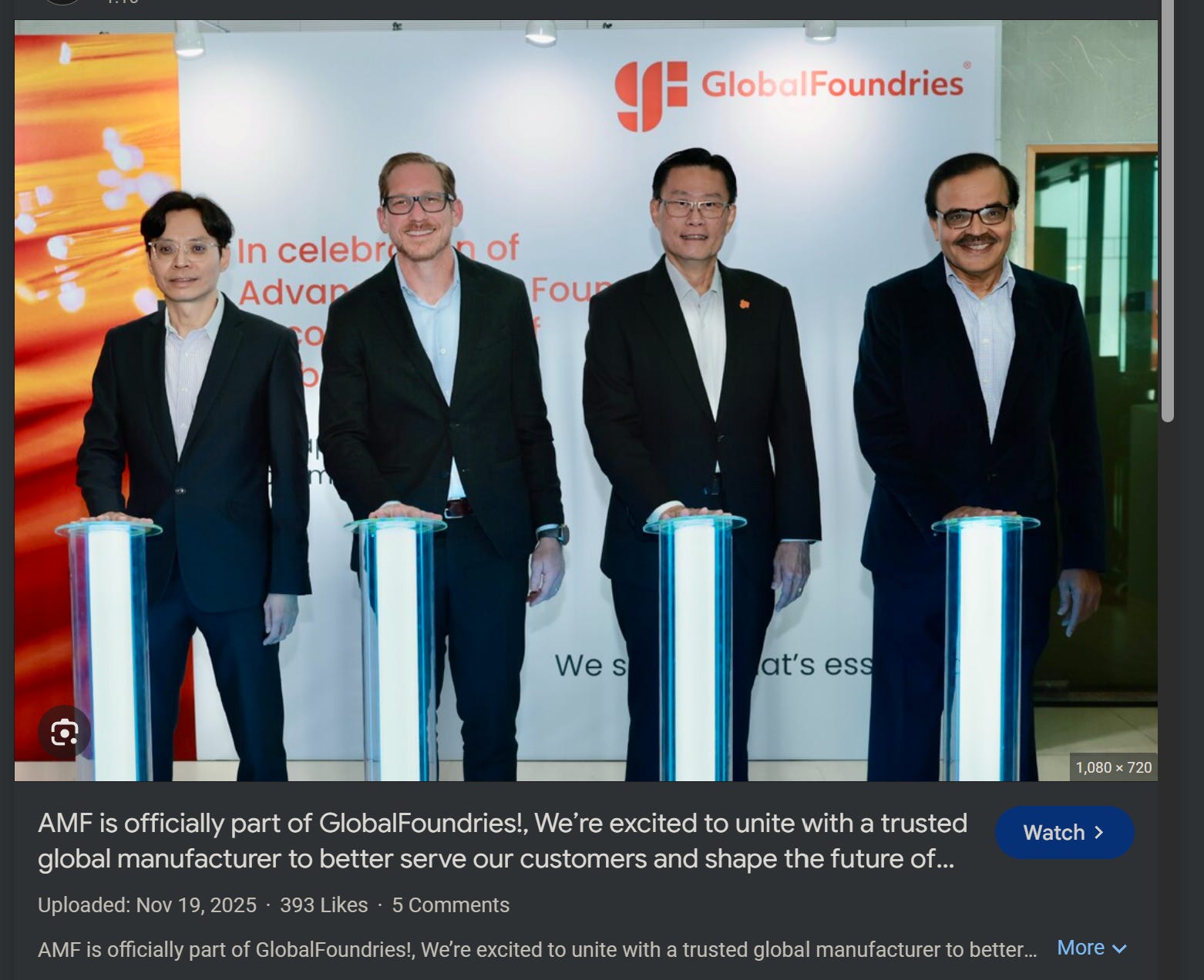
First came Advanced Micro Foundry, or AMF. Buying this specialty photonics manufacturer in Singapore made GlobalFoundries the world leader in pure-play photonics revenue. AMF brought 15 years of experience and a 200mm manufacturing setup. GlobalFoundries is now scaling that technology to 300mm to meet massive AI demand. The company expects AMF to add more than $75 million in revenue in 2026. Looking further ahead, they want silicon photonics to hit a $1 billion annual revenue run rate by 2028.
Current CEO Tim Breen explained the strategy behind the deal. He noted that buying AMF gives the company a ten-year roadmap for advanced optics. It also speeds up their expansion into new markets like quantum computing and automotive tech.
Next, they bought InfiniLink. This Cairo-based startup builds high-speed optical connections. While AMF brought manufacturing scale, InfiniLink brought deep skills in system architecture and circuit design. Together, they allow GlobalFoundries to offer ready-to-use platforms. Customers get hardware and software that already work perfectly together, saving them months of development time.
The AMD Partnership
The strongest proof of this strategy is a growing partnership with AMD. In April 2026, reports showed AMD chose GlobalFoundries to build the optical chips for its upcoming Instinct MI500 AI accelerators.
These new accelerators launch in 2027 and represent a huge shift in AI hardware. AMD gets its main 2nm computer chips from TSMC. However, it relies on GlobalFoundries for the optical connections that link these massive chips together. This mixed approach is quickly becoming the industry standard. By using light instead of copper, AMD gets a higher connection density and uses far less power for large AI tasks.
Solving the Connection Crisis
In May 2026, the company announced a major technical leap called SCALE. The name stands for Silicon Photonics Co-packaged Advanced Light Engine. It is the first platform built specifically to meet the strict optical standards of modern AI systems.
SCALE uses multiple wavelengths of light to move data. This method pushes far more information than traditional copper ever could. GlobalFoundries also worked with SENKO to create detachable fiber interfaces. Factory workers can now easily attach and detach fiber cables during testing. This small detail is vital for keeping manufacturing output high.
These new tools solve major problems for data centers. By placing optical engines right next to heavy-duty chips, GlobalFoundries fixes the connection bottlenecks that have frustrated engineers for years.
Looking Beyond Light
The company also looked beyond photonics to solve heat and power problems. In July 2024, they bought Gallium Nitride technology from Tagore Technology. This material handles extreme heat much better than standard silicon. Later, they bought MIPS and the ARC Processor technology from Synopsys. This gave them access to new processor cores.
By blending these computing parts with advanced manufacturing, GlobalFoundries makes it easier for customers to build physical AI. This includes putting artificial intelligence into the real world through robots and self-driving cars.
A Strong Financial Foundation
The numbers show the plan is working. In the first quarter of 2026, the company reported $1.634 billion in revenue. They also hold $3.8 billion in cash. This gives them the secure funding needed to expand their Fab 8.2 facility in Malta, New York.
During the earnings call, CEO Tim Breen noted that the company hit or beat the high end of its profit goals for the quarter. He said their specialized technology is driving major growth and creating real value across multiple markets.
GlobalFoundries is no longer struggling to keep up in the traditional chip race. They walked away from that fight to build a highly profitable business in AI infrastructure. Success in the coming decade will rely on making optical connections normal, cheap, and reliable. With big revenue goals and a major deal with AMD, GlobalFoundries is building the physical network that will carry the future of artificial intelligence.
Disclaimer:
All views expressed are my own and are provided solely for informational and educational purposes. This is not investment, legal, tax, or accounting advice, nor a recommendation to buy or sell any security. While I aim for accuracy, I cannot guarantee completeness or timeliness of information. The strategies and securities discussed may not suit every investor; past performance does not predict future results, and all investments carry risk, including loss of principal.
I may hold, or have held, positions in any mentioned securities. Opinions herein are subject to change without notice. This material reflects my personal views and does not represent those of any employer or affiliated organization. Please conduct your own research and consult a licensed professional before making any investment decisions.