
HIMX 0.00%↑
AAPL 0.00%↑
META 0.00%↑
NVDA 0.00%↑
Himax Technologies (NASDAQ: HIMX) is widely known for making display drivers. But the company is changing. It still relies on a strong automotive business to pay the bills. Yet, it is quickly stepping into a new role as a leader in wafer-level optics, co-packaged optics, and augmented reality. Recent earnings and new tech breakthroughs show Himax is no longer just a basic parts supplier. It sits quietly at the heart of the most advanced technology supply chains in the world.
The Q1 2026 Turning Point
The start of 2026 brought strong momentum. After Himax released its first quarter earnings, shares jumped almost 38 percent. The company beat expectations for both revenue and earnings per share. Revenue hit $199 million, landing at the very top of its own estimates. More importantly, leaders at the company called the first quarter the low point of the year. They expect a sharp and steady recovery for the rest of 2026.
CFO Karen Tiao shared a bright outlook for the months ahead. She noted that second quarter revenues should rise by 10 to 13 percent compared to the first quarter. Gross margins are expected to reach around 32 percent. This improvement comes from selling more high margin products like optical and AI sensors, rather than just traditional display drivers. This change in what they sell is a big reason investors are looking at the company differently.
The Optical Lens Growth Engine
The biggest spark for growth at Himax is its Wafer Level Optics business. This process uses semiconductor methods to build optical parts on silicon wafers. It allows the company to make tiny lenses with extreme accuracy on a massive scale. Himax has spent more than ten years perfecting this craft. Today, this technology is vital for 3D sensing, smart glasses, and fast data transfers.
What makes Himax stand out is how it combines design skill with the ability to mass produce complex parts. These include diffractive optical elements, micro lens arrays, and waveguides. You can think of these parts as the eyes of modern devices. They make facial recognition work on your phone and allow hand gestures to control virtual reality headsets.
The CPO Breakthrough
The most exciting use for Himax optical tech right now is in Co-Packaged Optics. AI data centers and powerful computers use massive amounts of energy. To save power, the industry is replacing traditional copper wires with high speed light signals. Himax teamed up with FOCI Fiber Optic Communications to build a new packaging method. This system puts optical connectors directly inside multi-chip modules.
External reports from Hunterbrook Media claim Himax is the only supplier of micro lens arrays for the next generation of these optical platforms. These platforms might end up in hardware from giants like Nvidia. The report points out a special process Himax uses called nanoimprint lithography. It shapes tiny prisms and lenses that bend laser light 90 degrees. That specific bend is crucial for linking servers while cutting power use in massive AI data centers.
CEO Jordan Wu highlighted the importance of this shift during the earnings call. He explained that their first generation solution is ready. Small shipments will begin in the second half of this year. Meanwhile, a second generation setup aiming for 6.4T bandwidth is almost done with customer testing. Wu noted that 2026 is a year for testing and validation. However, he expects these engineering projects to bring real revenue and profit growth starting next year.
Smart Glasses: Combining AI and Microdisplays
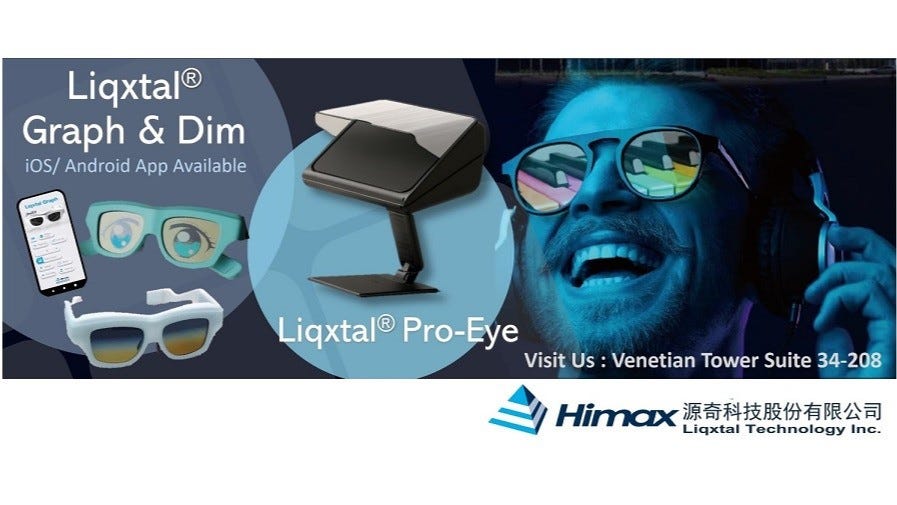
Himax is also using its optical lenses to build a strong presence in the smart glasses market. Very few companies in the world can build both ultra-low power AI sensors, which Himax calls WiseEye, and microdisplays.
The company makes Front-lit LCoS displays. These are widely viewed as the standard for see-through AR glasses. They hit the right balance of light weight, brightness, and battery life. At Display Week 2026, Himax showed off a new upgrade. The latest version improves contrast and gets rid of the “postcard effect” that often bothers users in dark rooms.
During the first quarter call, leaders shared a major milestone. A leading brand has chosen the WiseEye system for its upcoming smart glasses. Mass production will start later this year, and other big brands are expected to follow. Outside rumors suggest this early customer might be Apple or Meta, which only adds to the excitement.
The Automotive Bedrock
New optics and AI projects offer incredible upside. But the automotive display business gives Himax a solid financial floor. Even with a slow global car market, Himax holds a 40 percent share in automotive display drivers. It also controls well over half of the global market for touch and display driver integration.
Car makers are putting larger and sharper screens into new vehicles. Jordan Wu mentioned that car companies are adopting these advanced screens much faster now. This means Himax sells more parts per car, creating steady growth. The company expects its auto sales to grow every quarter through the rest of 2026, backed by hundreds of secured contracts.
Financial Strength and Shareholder Value
Himax feels confident in its new direction, and its dividend policy proves it. The company recently announced a cash dividend for the 2025 financial year of $0.252 per share. This represents a 100 percent payout of the profit from the previous year. Distributing roughly $44 million shows the company has a healthy balance sheet. It also proves management believes the optical and automotive businesses will keep generating strong cash flow.
Conclusion: A Multi-Year Growth Trajectory
Himax Technologies sits at a turning point. Moving away from standard display drivers and focusing on precise optical lenses and AI sensors has opened up massive new markets. Himax is making itself essential to the biggest technology companies in the world. It is helping power the optics revolution in AI data centers. It is also providing the tiny screens needed for the next wave of smart wearables.
As Jordan Wu explained, expanding beyond the traditional display business gives Himax a chance to grow in areas with better profit margins. The company blends a dominant spot in the car market with a huge technological lead in optics. For anyone watching the tech sector, Himax is becoming a very interesting story for 2026 and the years to come.
Disclaimer:
All views expressed are my own and are provided solely for informational and educational purposes. This is not investment, legal, tax, or accounting advice, nor a recommendation to buy or sell any security. While I aim for accuracy, I cannot guarantee completeness or timeliness of information. The strategies and securities discussed may not suit every investor; past performance does not predict future results, and all investments carry risk, including loss of principal.
I may hold, or have held, positions in any mentioned securities. Opinions herein are subject to change without notice. This material reflects my personal views and does not represent those of any employer or affiliated organization. Please conduct your own research and consult a licensed professional before making any investment decisions.