

For most of their short history, on-chain perpetual futures were a playground for crypto power users: airdrop hunters, high-leverage traders and anyone willing to bridge funds onto an unfamiliar chain. In 2026, that changed fast.
A presidential shout-out for Hyperliquid at the White House and Robinhood’s decision to plug Lighter directly into its wallet have pulled decentralized perps out of the crypto niche. They are now part of conversations at the highest levels of US policy and inside one of the best-known retail trading brands in the world.
What are on-chain perpetual futures?
Perpetual futures, or “perps,” are leveraged derivatives with no expiry date. Traders can hold a long or short position indefinitely, while a periodic funding rate keeps the contract price anchored to the underlying asset.
Perps are the most liquid product in crypto, but almost all of that trading has historically happened offshore. On-chain perp exchanges like Hyperliquid and Lighter run their order books on their own blockchains. Users trade from a self-custody wallet instead of handing funds to a centralized exchange, and every trade settles transparently on-chain.
Trump puts Hyperliquid on the map
On August 19, 2026, at a White House meeting with crypto and tech executives, President Trump said CFTC Chairman Michael Selig was working to bring Hyperliquid into the US “in a fully compliant and legal fashion.” SEC Chair Paul Atkins and White House crypto adviser Patrick Witt were also in the room.
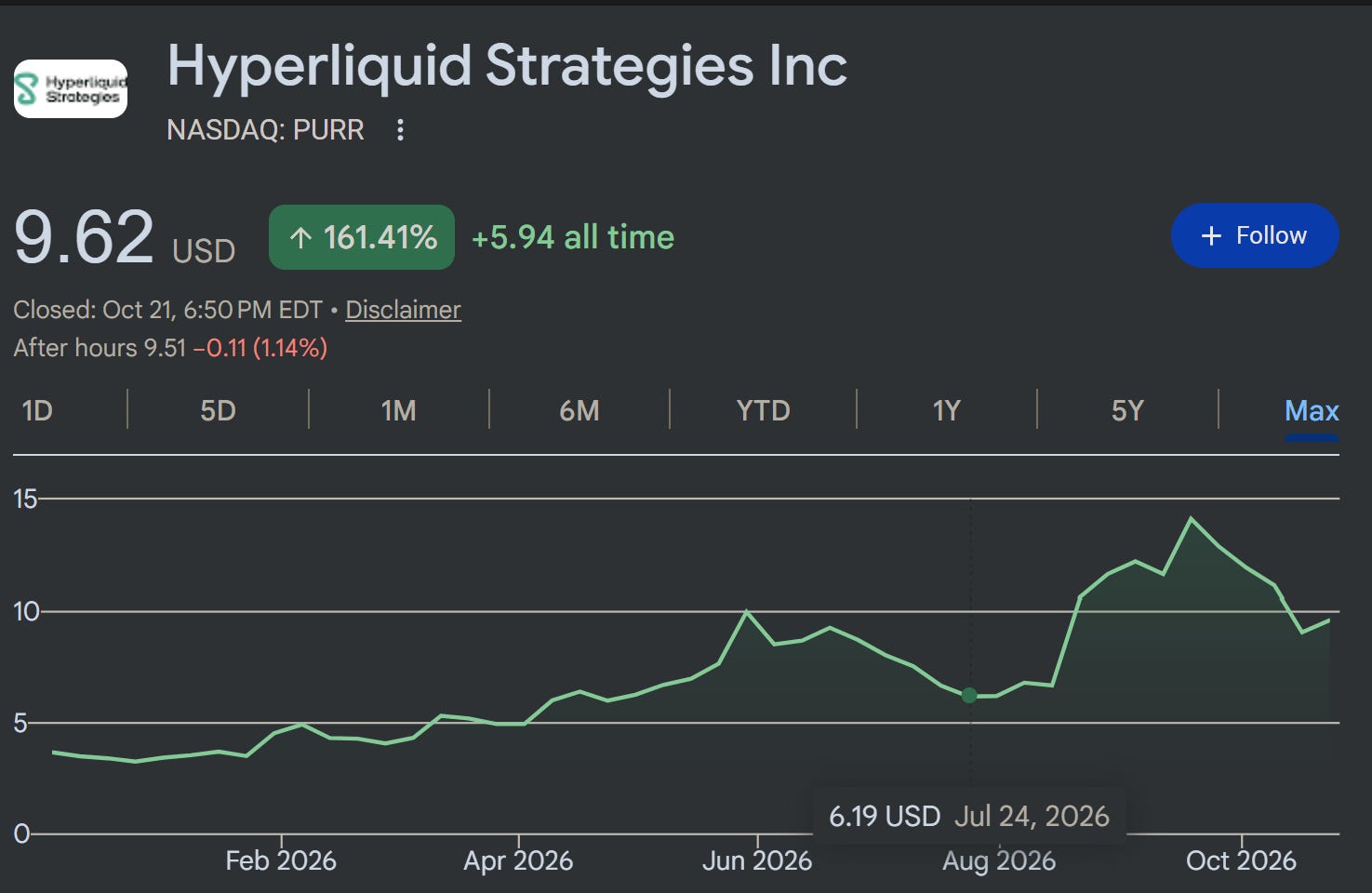
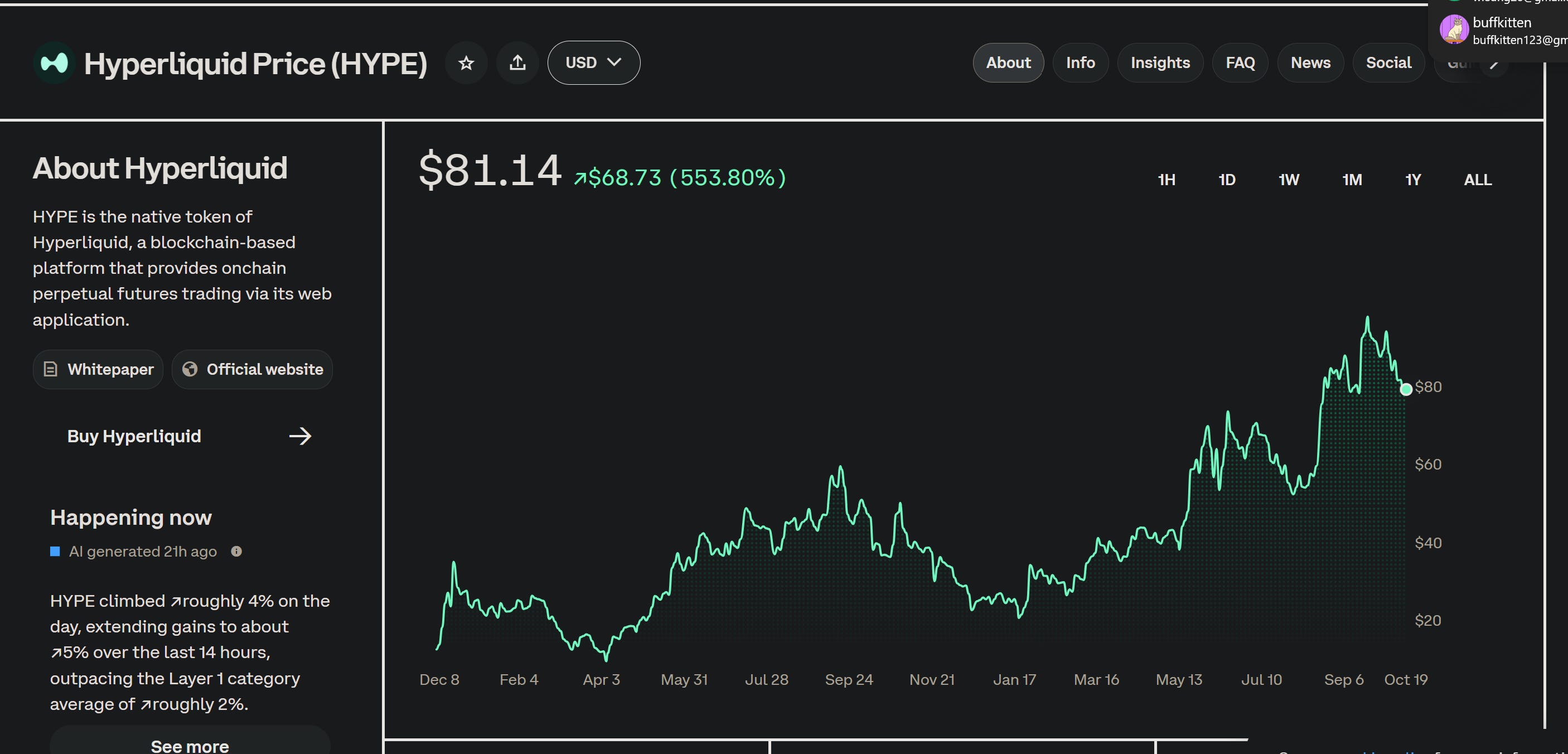
Markets reacted within hours. Hyperliquid’s HYPE token jumped more than 20% that day, and shares of Nasdaq-listed Hyperliquid Strategies (PURR), a company built around holding HYPE, rose as much as 31%. The same day, Coinbase’s Base App launched Hyperliquid perpetual trading. HYPE went on to set an all-time high near $98 on September 23.
The remarks did not amount to regulatory approval, and US residents still cannot trade on Hyperliquid. But they landed on prepared ground. On May 29, the CFTC approved the first US-listed bitcoin perpetual contract on Kalshi and cleared Coinbase to offer perps through its offshore arm. Selig has argued that the lack of a domestic pathway pushed perps liquidity overseas, and he has made onshoring it a priority.
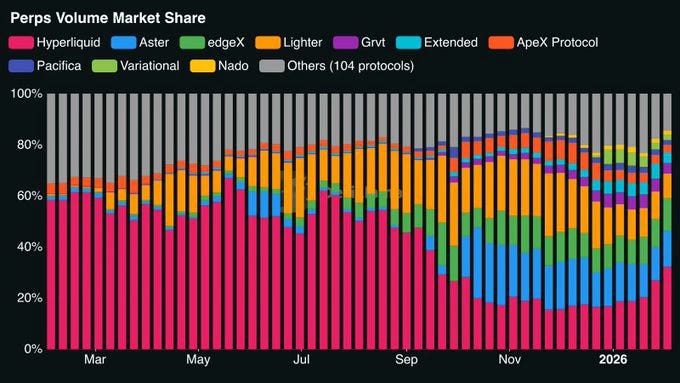
Hyperliquid is the obvious prize. It handled roughly $203 billion in 30-day volume in early October, per DefiLlama data cited by Delphi Digital, and held about 58% of on-chain perp open interest in the third quarter. Analysts see a licensed market built on its HIP-3 builder-deployed framework as one likely route into the US.
Robinhood’s bet on Lighter
If Hyperliquid got the political spotlight, Lighter got distribution. On July 1, 2026, Robinhood launched Robinhood Chain, an Ethereum layer-2 network built on Arbitrum, and a revamped Robinhood Wallet that routes perpetual futures to Lighter for eligible users in selected markets.
The setup is simple for the user. They deposit the USDG stablecoin from Robinhood Wallet as margin and trade Lighter’s markets without leaving the app. Robinhood and Lighter reportedly split the revenue 50/50, and Lighter set aside $11 million in LIT tokens as incentives, with double points for trades placed through Robinhood Wallet.
The relationship runs deeper than a routing deal. Robinhood Ventures backed Lighter’s $68 million raise in November 2025. Founded in 2022 by Vladimir Novakovski and live on mainnet since October 2025, Lighter runs an order book whose matching is verified with zero-knowledge proofs. It charges ordinary accounts no trading fees and lists stocks, commodities and FX alongside crypto.
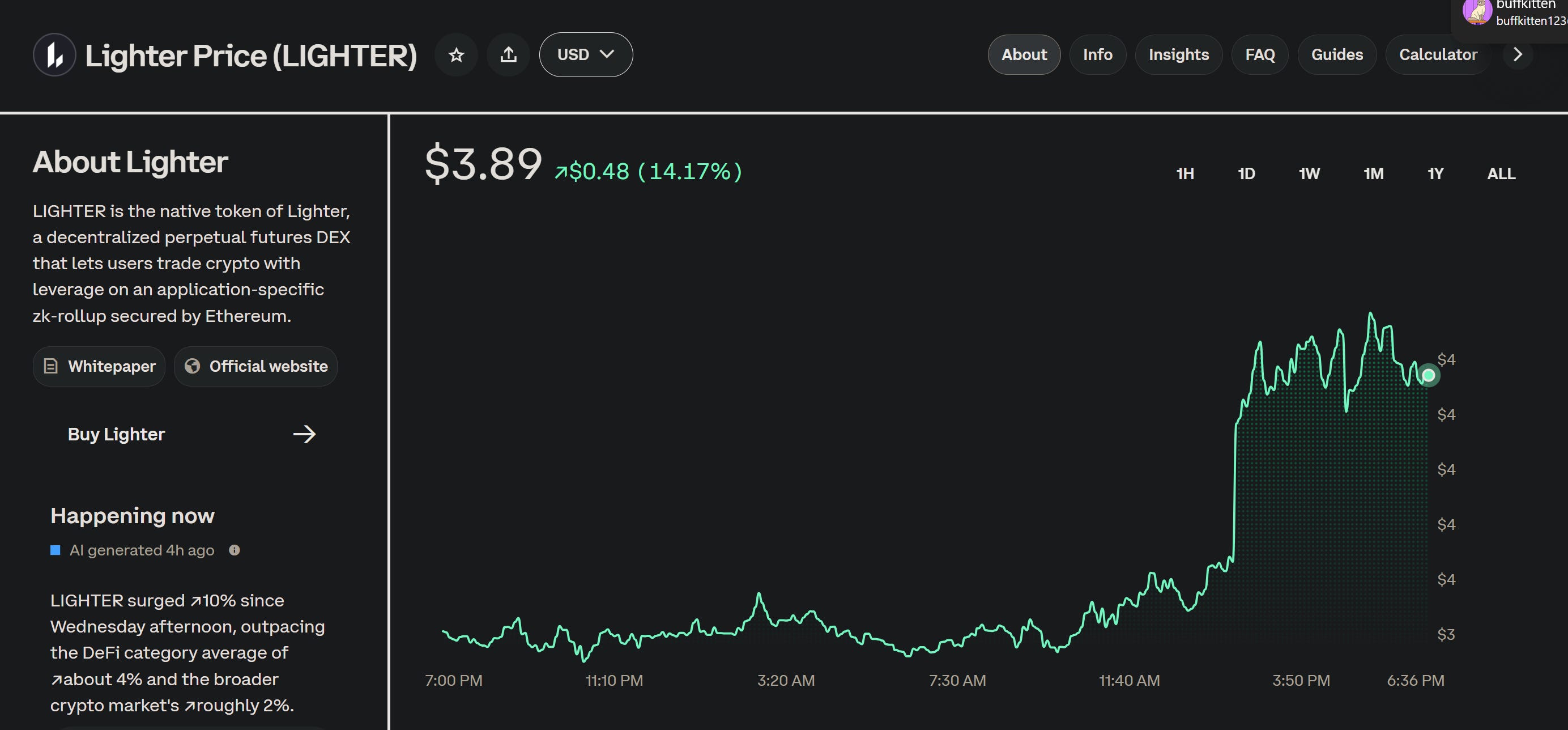
Lighter calls the Robinhood integration its first “Domain”: rather than winning users one by one, it becomes the engine beneath someone else’s front end. The model appears to be working. Lighter posted about $56 billion in 30-day volume in early October, a figure Delphi Digital notes likely includes Robinhood Chain flow.
There is one major catch. Lighter perps in Robinhood Wallet are not available to residents of the US, UK, Canada, Switzerland, the UAE or Singapore. That could change. Reports on October 21 said Lighter plans to apply for a US license in November and may pursue an integration with Robinhood’s US platform if approved. Lighter has not confirmed the reports, but LIT climbed about 20% on the news.
Two paths to the same destination
Hyperliquid and Lighter are taking different roads toward mainstream adoption. Hyperliquid is the liquidity leader, and its path runs top-down through Washington: regulators building a compliant on-ramp for a platform that already dominates the market. Lighter is going bottom-up, borrowing Robinhood’s brand, app and user base to reach traders who would never seek out a standalone DEX.
Both stories point the same way. Perps are no longer something US policymakers want to push offshore, and on-chain venues are no longer just for crypto natives. The infrastructure, the political will and the retail distribution are lining up at the same time.
The risks haven’t gone away
Mainstream access does not make perps any less dangerous. They are leveraged products, and liquidations are automatic. When bitcoin jumped 7.1% intraday on August 19, nearly $2.7 billion in short positions were wiped out.
On-chain venues also carry smart contract risk, and the US rulebook is still being written. CME Group CEO Terry Duffy has opposed treating perpetual contracts as futures, and broader market structure legislation is still pending in Congress. For now, a presidential comment is a signal, not a license.
What to watch next
• CFTC action on Hyperliquid: any formal pathway, such as a licensed HIP-3 market, would turn Trump’s words into access for US traders.
• Lighter’s US license bid: a November filing would be the first concrete step toward Robinhood perps for American users.
• More approved US perps: each new CFTC-cleared contract widens the lane that on-chain venues hope to join.
• Retail volume: whether Robinhood Wallet flow keeps lifting Lighter’s share against Hyperliquid.
The bottom line
A year ago, on-chain perpetual futures were a niche product for crypto insiders. Today, Hyperliquid has been named by the president, Lighter is running inside Robinhood’s wallet, and US regulators have approved domestic perps for the first time. The masses are not fully on board yet, especially in the US, but the doors are opening faster than almost anyone expected.
Disclaimer:
All views expressed are my own and are provided solely for informational and educational purposes. This is not investment, legal, tax, or accounting advice, nor a recommendation to buy or sell any security. While I aim for accuracy, I cannot guarantee completeness or timeliness of information. The strategies and securities discussed may not suit every investor; past performance does not predict future results, and all investments carry risk, including loss of principal.
I may hold, or have held, positions in any mentioned securities. Opinions herein are subject to change without notice. This material reflects my personal views and does not represent those of any employer or affiliated organization. Please conduct your own research and consult a licensed professional before making any investment decisions.