

The dramatic events of this past weekend in Caracas have sent shockwaves through the geopolitical landscape of the Western Hemisphere. The capture of Nicolás Maduro by United States forces on January 3 has fundamentally altered the risk calculus for South American assets. While global energy majors scramble to assess the state of the Orinoco oil belt under the proposed US-led transition, a far more agile opportunity has emerged in the equity markets. MercadoLibre (MELI), often lazily dubbed the “Amazon of the South,” stands as the primary beneficiary of a potentially reopened Venezuela.

Investors watching the ticker fluctuate in Monday’s trading session might fear the uncertainty of “Operation Absolute Resolve.” They should not. The market is only just beginning to price in the reconstruction of an economy that was once the wealthiest in the region. Yet even stripping away the “Venezuela option,” MercadoLibre remains the most compelling growth story in the emerging markets, fuelled by a rapid expansion in fintech and a pioneering shift into humanoid robotics.
The Venezuela Option
For the past decade, Venezuela has been a black hole for multinational commerce. Most corporations exited entirely, writing off assets and fleeing hyperinflation. MercadoLibre took a different approach. The company maintained a skeletal operation, keeping its local marketplace active despite the collapse of the bolívar.
This strategy of “hibernation” is now paying a massive dividend. With the potential for a transitional government and the eventual lifting of sanctions, consumption in Venezuela is poised to snap back violently. MercadoLibre does not need to build infrastructure from scratch; it simply needs to turn the lights back on.
Analysts have long treated Venezuela as a zero in their valuation models. It contributes less than 5 per cent of revenue and is grouped into the “other countries” reporting bucket. If the Venezuelan economy stabilizes, this zero becomes a multi-billion dollar revenue engine within five years. Investors buying MELI today are effectively paying for the robust businesses in Brazil and Mexico while getting the Venezuelan recovery for free.
The Fintech Juggernaut
While the geopolitical headlines dominate the news cycle, the fundamental engine of MercadoLibre’s stock price remains Mercado Pago. The company’s fintech arm has ceased to be a mere payment processor for e-commerce and has evolved into a comprehensive digital bank.
The third-quarter results from late 2025 painted a picture of unbridled growth. The credit portfolio has swelled to $11bn, an 83 per cent increase year-on-year. This is not reckless lending; it is data-driven precision. Because MELI sees the transaction history of its merchants and the buying habits of its consumers, it possesses a credit scoring advantage that traditional incumbents cannot match.
Furthermore, the “principality” strategy is working. Mercado Pago is becoming the primary bank account for its 72 million monthly active users. The explosion in off-platform Total Payment Volume (TPV) indicates that users are utilizing their digital wallets to pay for everything from utilities to street food, bypassing the legacy banking infrastructure entirely.
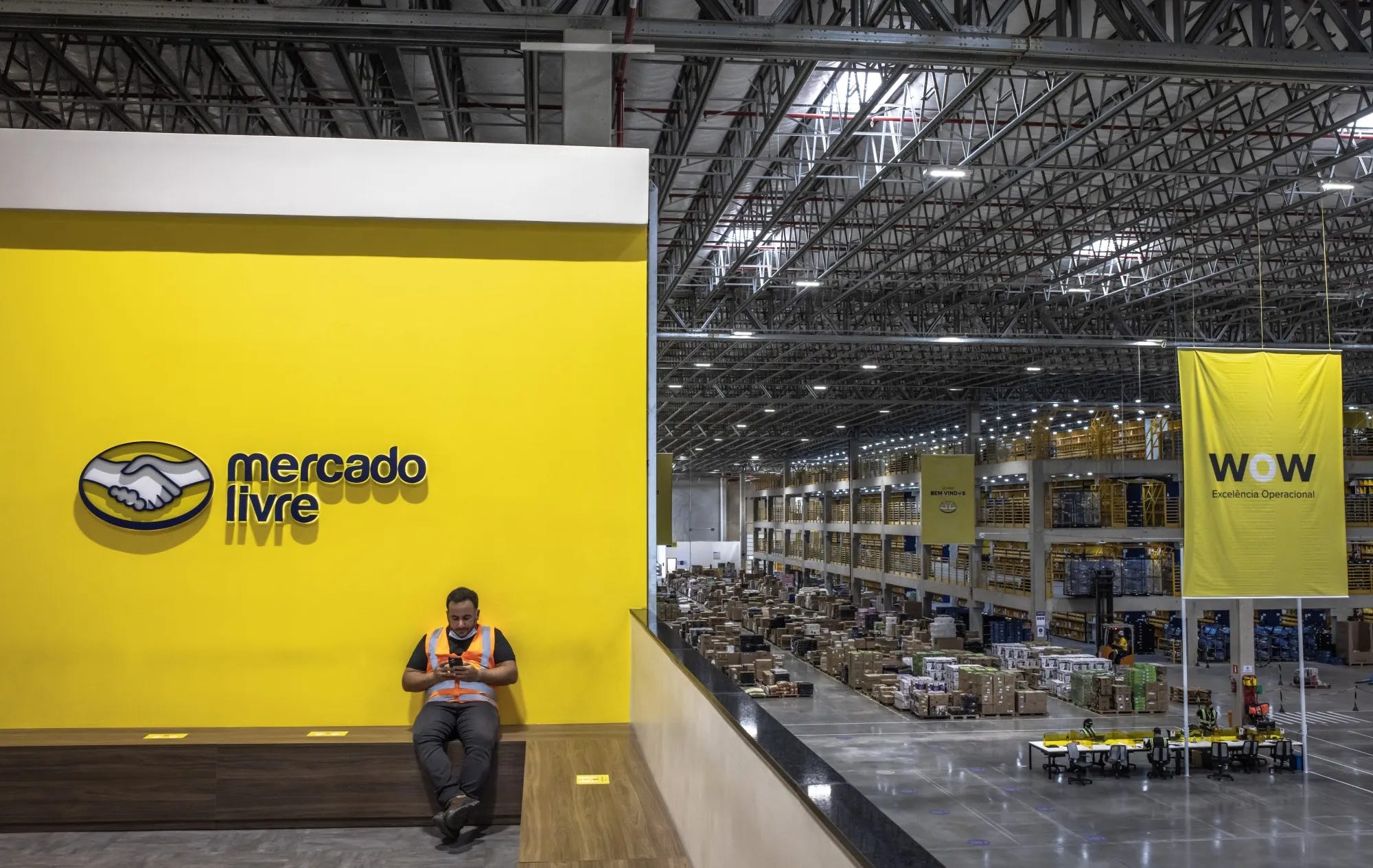
The Robotics Revolution
Perhaps the most underappreciated aspect of the bull case is MercadoLibre’s aggressive pivot toward automation. In December 2025, the company announced a landmark commercial agreement with Agility Robotics to deploy “Digit” humanoid robots in its fulfillment centers.
This is a direct assault on the most stubborn line item in any logistics P&L: labour costs. The deployment, which began in Texas and is slated for expansion into key Latin American hubs, utilizes bipedal robots capable of navigating existing warehouse infrastructure to handle totes and packages.
In a region where labour laws can be rigid and inflationary pressures are constant, the ability to automate the “pick and pack” process provides a structural margin advantage. It insulates the company from future wage spikes and ensures that its delivery network, already the fastest in the region, can operate 24/7 with unwavering efficiency.
A Valuation Disconnect
Despite these tailwinds, MercadoLibre stock is trading at a valuation that belies its growth profile. The “Latin America Discount” has historically depressed the multiple, as foreign capital fears regional instability. The current situation in Venezuela, paradoxically, may exacerbate this fear in the short term before alleviating it.
This disconnect is the opportunity. We are witnessing a company that has delivered 27 consecutive quarters of revenue growth above 30 per cent. It has successfully defended its moat against Asian competitors like Shopee and is now cementing its dominance through deep-tech investments in AI and robotics.
MELI 0.00%↑
Bullish
Disclaimer:
All views expressed are my own and are provided solely for informational and educational purposes. This is not investment, legal, tax, or accounting advice, nor a recommendation to buy or sell any security. While I aim for accuracy, I cannot guarantee completeness or timeliness of information. The strategies and securities discussed may not suit every investor; past performance does not predict future results, and all investments carry risk, including loss of principal.
I may hold, or have held, positions in any mentioned securities. Opinions herein are subject to change without notice. This material reflects my personal views and does not represent those of any employer or affiliated organization. Please conduct your own research and consult a licensed professional before making any investment decisions.