

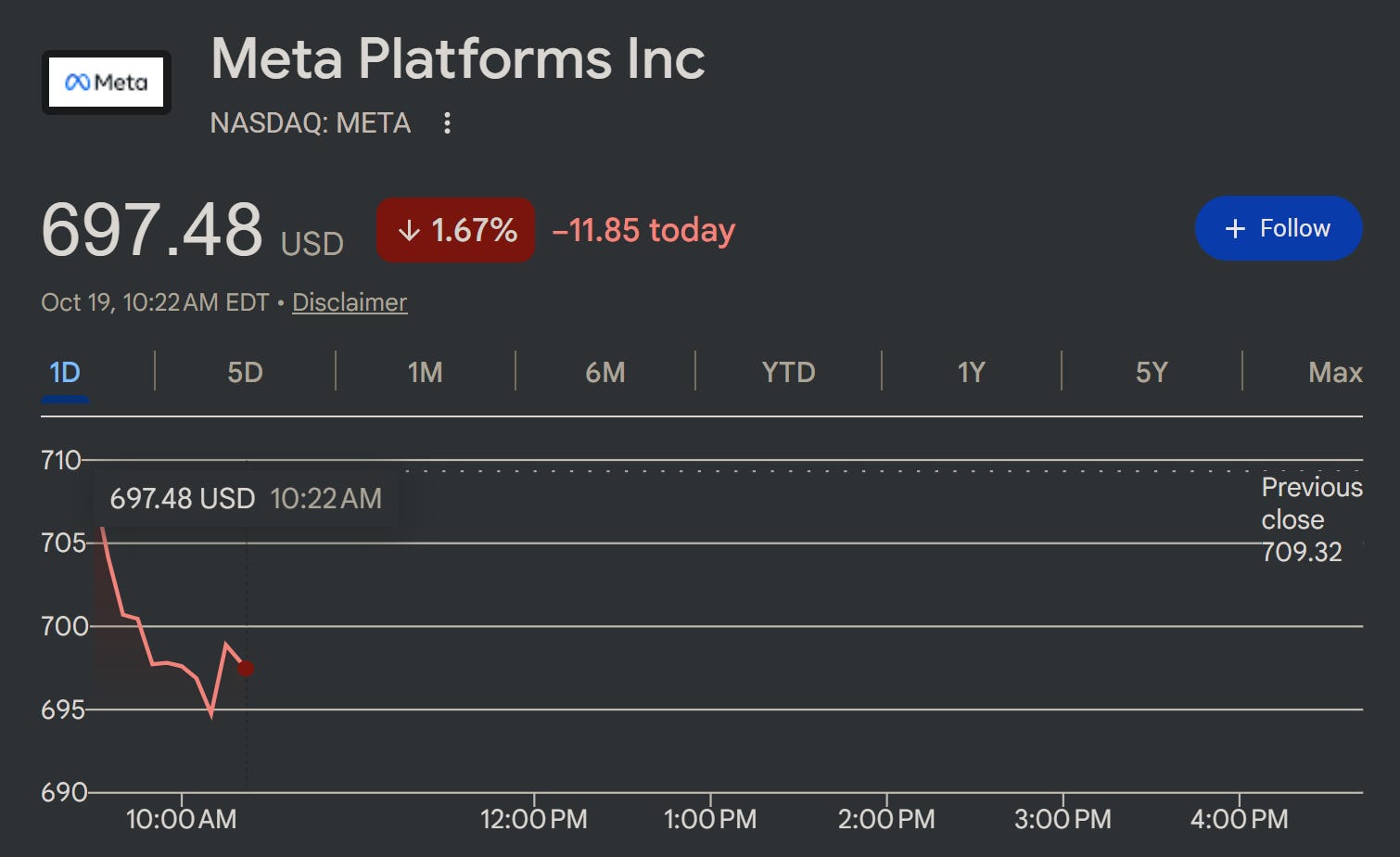
Meta Platforms reports third-quarter results this Wednesday, and the number that matters most may not be revenue or earnings. It’s capital spending. The company will release results after the market close on Wednesday, October 21, with a conference call at 1:30 p.m. PT / 4:30 p.m. ET. For investors trying to judge whether the AI infrastructure build-out is still accelerating, few reports carry more weight.
The ad business is the easy part
Meta’s core business has been strong. The company guided third-quarter revenue to between $61 billion and $64 billion, assuming roughly a 1% currency headwind. Analysts expect about $63.3 billion. Bank of America is more bullish, projecting $62.2 billion in advertising revenue, which would be 24% year-over-year growth, and says its checks show AI-powered targeting is helping advertisers get better returns.
Earnings will look messier. Meta expects to book roughly $10 billion in legal expenses in the quarter, tied to a multistate youth-safety settlement, and that charge was not included in the expense outlook Meta gave investors in July. Expect a headline EPS miss that has little to do with the underlying business.
Capex is the real story
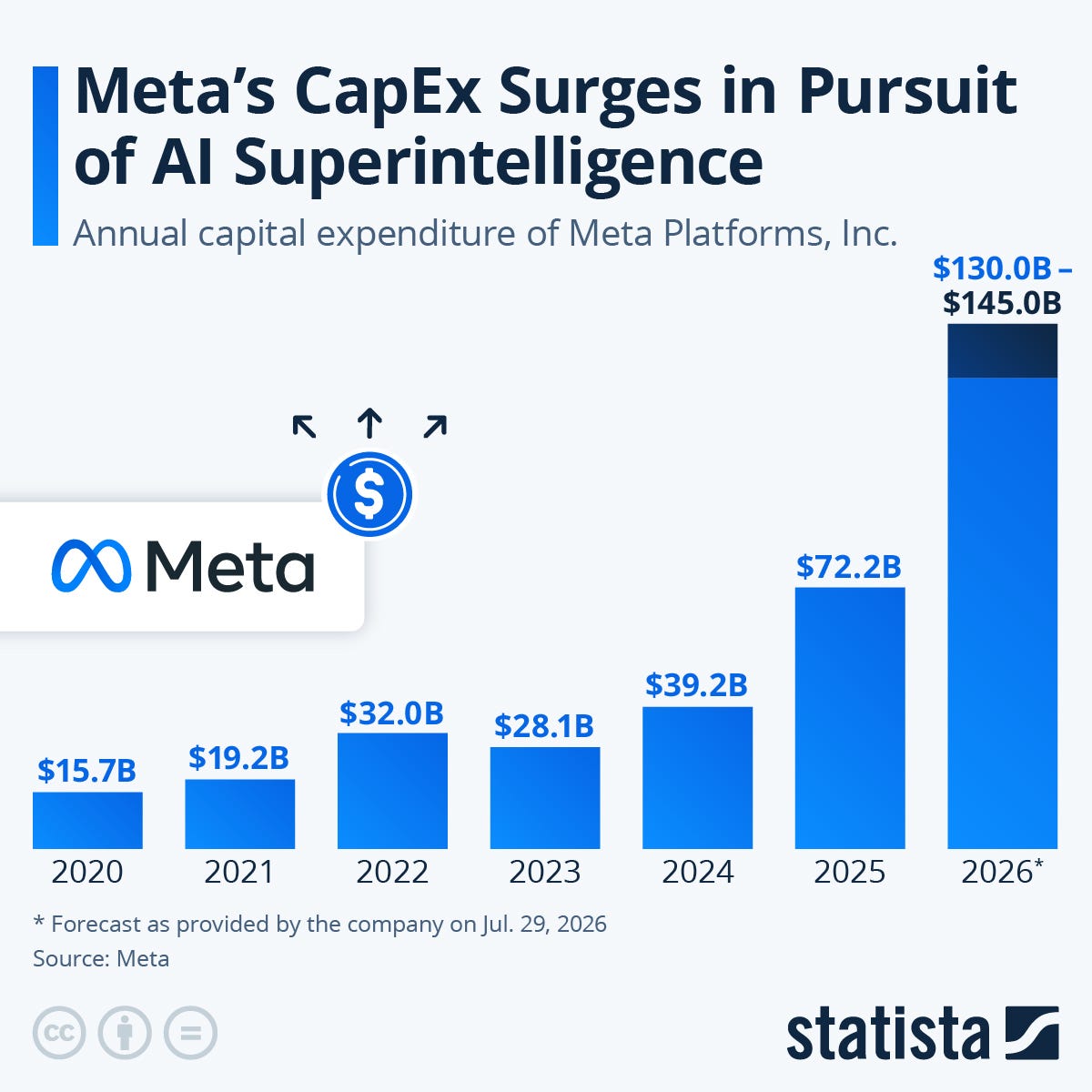
Meta has raised its spending plans repeatedly this year. In January it guided 2026 capex to $115–135 billion. In April it lifted that to $125–145 billion, citing higher component pricing and data center costs for future capacity. In July it narrowed the range to $130–145 billion.
The strain is showing in cash flow. Second-quarter capex hit $31.1 billion, nearly double the $17.0 billion spent a year earlier, while free cash flow fell to just $784 million. Shares dropped roughly 8–10% after hours on that report. Morningstar notes that the full-year guide implies about $40–47 billion of capex per quarter in the second half, which likely pushes free cash flow negative.
The 2027 question
The biggest swing factor is next year. Meta gave no 2027 capex guidance last quarter, and the October report is historically where the company has introduced the following year’s spending plan, with the market often selling the capex number before reacting to revenue. Last year’s precedent is sobering: the stock fell 11.3% on October 30, 2025, after a one-time tax charge and a bigger capex plan.
Expectations are already high. Consensus for 2027 capex sits around $185.6 billion, and Bank of America recently raised its 2027 forecast to $205 billion. Options traders are bracing for volatility, pricing in a roughly 6% move in the stock.
Why the whole market is watching
Meta’s guidance is effectively a demand signal for the entire AI supply chain. Its spending outlook tends to move chip and data center stocks the next morning. A 2027 figure at or above $200 billion would suggest the AI build-out is still gaining speed. A number closer to consensus, or more talk of “flexibility,” could be read as the first sign of a plateau.
Investors will also listen for new ways to pay for it all. Morningstar is watching whether Meta announces a signed deal to sell compute to an outside customer, which would give the infrastructure spend a revenue line beyond advertising.
The bottom line
A revenue beat looks likely. The real verdict on Wednesday will come from the capex guide: how big 2027 gets, and how convincingly Meta explains the return on it.
Disclaimer:
All views expressed are my own and are provided solely for informational and educational purposes. This is not investment, legal, tax, or accounting advice, nor a recommendation to buy or sell any security. While I aim for accuracy, I cannot guarantee completeness or timeliness of information. The strategies and securities discussed may not suit every investor; past performance does not predict future results, and all investments carry risk, including loss of principal.
I may hold, or have held, positions in any mentioned securities. Opinions herein are subject to change without notice. This material reflects my personal views and does not represent those of any employer or affiliated organization. Please conduct your own research and consult a licensed professional before making any investment decisions.