
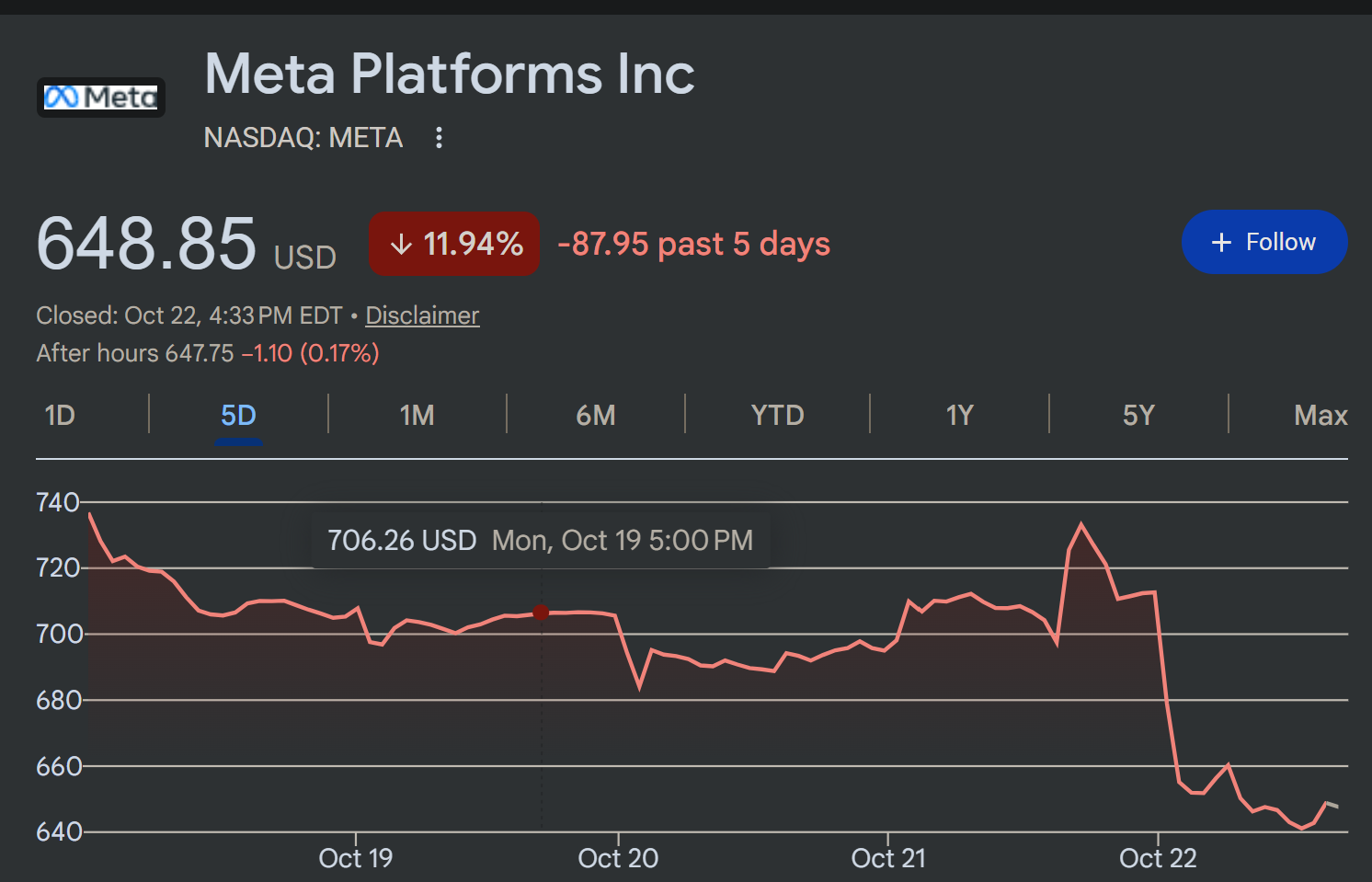
Meta Platforms just delivered one of the strongest quarters in its history, and Wall Street still sold the stock. After reporting third-quarter 2026 results after the bell on Wednesday, October 21, Meta shares surged nearly 8% to just below $749 in after-hours trading. By Thursday morning, that rally had evaporated. As Nasdaq 100 futures fell and Asian chip stocks slid, Meta stock dropped to around $676 in premarket trading, almost 10% below its after-hours peak and beneath Wednesday’s closing level.
The reversal shows how the market is now judging Big Tech: a revenue beat is no longer enough when the price tag on artificial intelligence keeps climbing.
A Blowout Quarter by Almost Any Measure
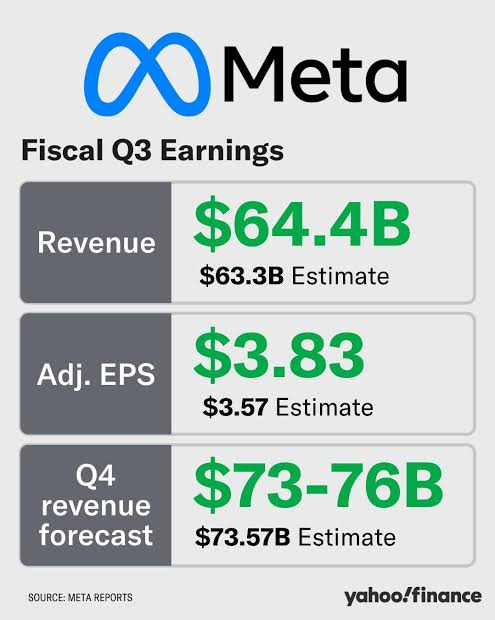
On paper, Meta’s Q3 2026 earnings were hard to fault. Revenue jumped 26% year over year to a record $64.6 billion, well ahead of the roughly $63.3 billion analysts expected. Advertising did the heavy lifting: ad impressions across Meta’s Family of Apps rose 10%, while the average price per ad climbed 14%, a sign that AI-driven ad targeting is helping advertisers get more for their money.
Earnings beat too. Diluted EPS came in at $3.83 against estimates near $3.57, and the company issued upbeat guidance for the current quarter. Losses at Reality Labs, Meta’s metaverse and hardware unit, also narrowed.
So why did the stock fall?
AI Spending Fears Hit the Whole Tech Sector
The biggest factor was the cost of Meta’s AI ambitions. The company expects 2026 capital expenditures of $135 billion to $145 billion as it pours money into data centers and computing power, while infrastructure and third-party AI token costs are rising fast. Full-year 2026 expenses are now forecast at $175 billion to $179 billion, up from a prior range of $165 billion to $169 billion.
The cash impact is now visible. Meta reported negative free cash flow of about $2.12 billion for the quarter, the first time it has burned cash on that basis since 2012.
That worry wasn’t unique to Meta. Overnight, investors grew more skeptical of the broader AI trade, dragging down Nasdaq futures and chipmakers across Asia. Tesla also gave back an initial post-earnings gain, and Netflix had disappointed earlier in the week. Rising oil prices and jitters in European bond markets added to the risk-off tone.
A $9.9 Billion Legal Charge Clouds the Profit Picture
Meta’s headline profit was also weighed down by a one-time legal charge of $9.89 billion, tied to an agreement reached in August with a coalition of U.S. state attorneys general. The charge, which also accounts for most of the increase in the full-year expense outlook, pushed quarterly costs up 68% to $51.6 billion and cut operating income 37% to about $13 billion. Operating margin fell to 20% from 40% a year earlier.
Excluding the charge, the picture looks very different: operating income would have risen 11% to $22.88 billion, and EPS would have been $7.40. Still, a charge equal to roughly 15% of quarterly revenue is a reminder that legal and regulatory risk, especially around youth safety, remains a real cost for the company.
Meta’s New Non-Voting Share Class
Meta also surprised investors with plans for a new class of non-voting Class C stock. Every shareholder will receive one Class C share for each share they own, effectively a 2-for-1 stock split, with trading expected to begin in late January 2027.
The structure gives Meta a new currency that could help fund its AI buildout without diluting CEO Mark Zuckerberg’s voting control. Filings also indicate Zuckerberg may sell up to 20% of the non-voting shares he receives. For some investors, that raised fresh governance questions at a company where minority shareholders already have limited say, and market reports pointed to the plan as one more reason traders turned cautious.
What Investors Are Watching Next
Technical traders are focused on support near $673 to $675. A sustained break below that zone could deepen the selloff, while reclaiming the $694 to $698 area, roughly where the stock closed before earnings, would suggest buyers are stepping back in.
The next big test for the AI trade comes soon. Microsoft and Alphabet report on October 28, followed by Amazon on October 29. Their numbers on cloud growth and AI spending will show whether Meta’s reversal was a one-off or part of a broader shift in investor sentiment.
The Bottom Line
Meta’s core business is firing on all cylinders, with record revenue, rising ad prices and a stronger outlook. But the market wants proof that the company’s massive AI spending will pay off. Until investors see clearer returns, even blowout quarters may not be enough to keep Meta stock moving higher.
Disclaimer:
All views expressed are my own and are provided solely for informational and educational purposes. This is not investment, legal, tax, or accounting advice, nor a recommendation to buy or sell any security. While I aim for accuracy, I cannot guarantee completeness or timeliness of information. The strategies and securities discussed may not suit every investor; past performance does not predict future results, and all investments carry risk, including loss of principal.
I may hold, or have held, positions in any mentioned securities. Opinions herein are subject to change without notice. This material reflects my personal views and does not represent those of any employer or affiliated organization. Please conduct your own research and consult a licensed professional before making any investment decisions.