

The global semiconductor landscape has shifted enormously. It has moved from a decade defined by raw computational scaling to one dictated by the “Memory Wall.” This structural bottleneck means the speed of data delivery to processors now decides the limits of artificial intelligence performance. In this new era, Micron Technology, SanDisk Corporation, and Western Digital have emerged as the primary architects of the physical infrastructure that sustains the generative AI revolution. Their valuations have seen an unprecedented surge. SanDisk returned 559.4% in 2025, and Micron reached record-breaking stock prices above $343 by early 2026. This represents a fundamental repricing of memory and storage. They are no longer just cyclical commodities but strategic assets.
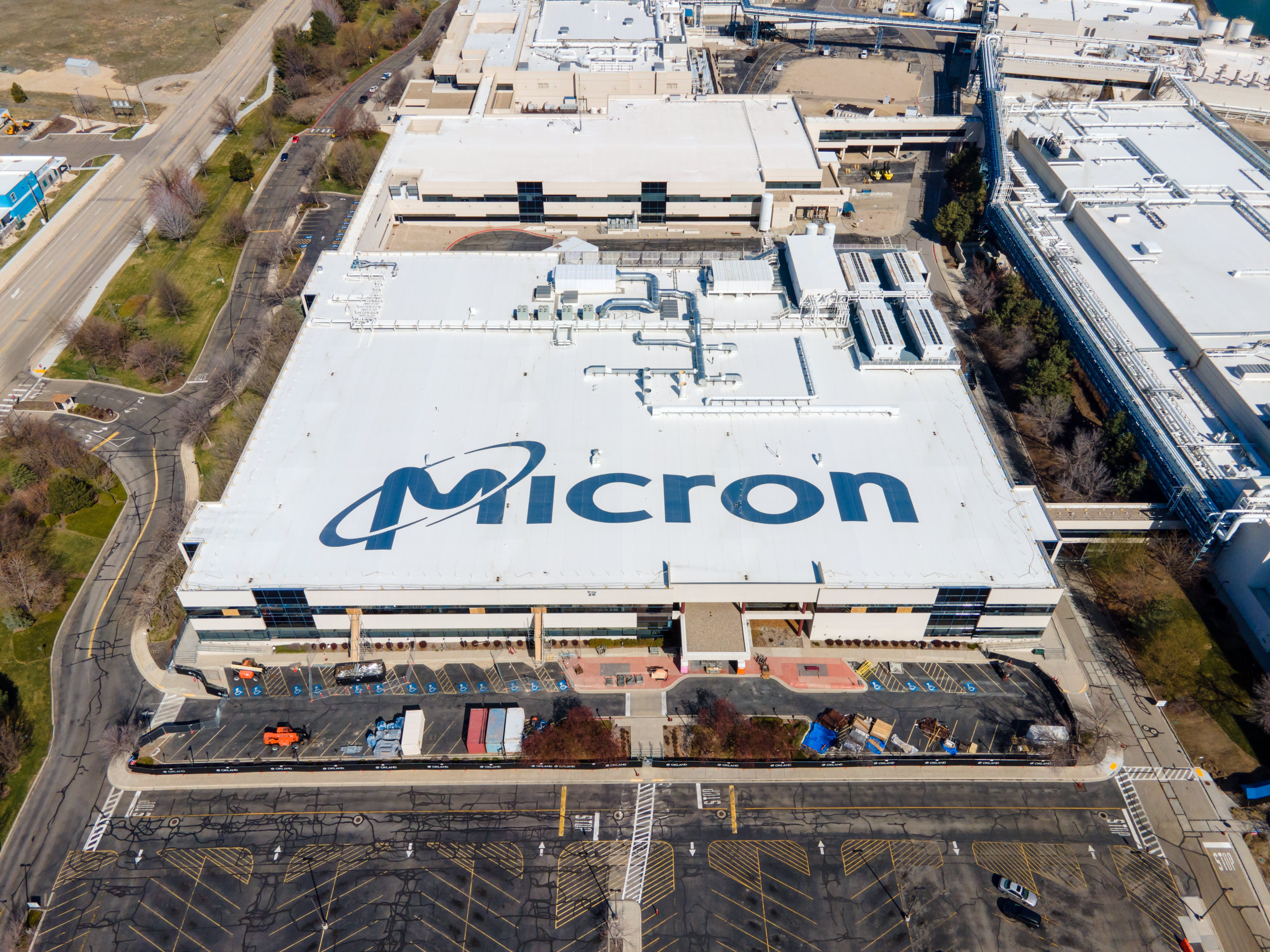
Micron Technology: From Commodity Maker to AI Pillar
Micron Technology (MU) has shed its image as a commodity vendor. It has proven it can compete at the highest levels of semiconductor engineering. A strategic pivot toward high-margin AI data center products drove its stock surge. The share price reached a record high of $294.50 on December 24, 2025, and continued past $343 in January 2026.
Key Technology and Differentiation
Micron centers its AI strategy on “HBM-ization.” This process stacks specialized DRAM chips vertically to provide a wide data path. Its flagship HBM3E technology offers a 30% power-efficiency advantage over competitors, which is critical for power-hungry data centers. Furthermore, Micron is a first-mover in the HBM4 race. This technology features a 2048-bit interface that doubles the interface width and allows peak bandwidth per stack to exceed 2.0 TB/s.
Differentiation lies in technological leadership and geographic advantage. As a U.S.-headquartered supplier, Micron leverages “U.S. sovereignty” amid geopolitical tensions. It benefits from over $6 billion in CHIPS Act grants to accelerate domestic production in Idaho and New York. Its 1-gamma process node is considered the current pinnacle of memory technology. It provides the density and efficiency required for trillion-parameter AI models.
Value in AI
In the AI hardware stack, memory is now a “component multiplier.” Every new GPU generation, such as NVIDIA’s Blackwell and Rubin platforms, requires more memory capacity and bandwidth. Micron has sold out its entire HBM production capacity through 2026. Hyperscalers are locking in long-term agreements to secure supply. Additionally, Micron addresses “AI at the Edge” through its LPCAMM2 and SOCAMM2 form factors. These provide modular, low-power memory for “AI PCs” and smartphones that must run Large Language Models (LLMs) locally.
SanDisk: The Flash Storage Pure-Play
The corporate history of Western Digital took a decisive turn in February 2025. The company formally separated its flash and HDD businesses to create SanDisk Corporation as an independent, pure-play NAND entity. Since the spin-off, SanDisk (SNDK) has become the top performer in the S&P 500, surging over 500% in a single year.
Key Technology and Differentiation
SanDisk differentiates itself through its UltraQLC platform, headlined by the SN670 256TB NVMe SSD. This drive represents a fundamental shift in how Quad-Level Cell (QLC) NAND is utilized. Traditional drives rely on a pseudo-SLC buffer. Once that buffer is exhausted, they hit a “performance cliff.” SanDisk uses “Direct Write QLC” instead. This technology enables consistent, power-loss-safe performance over the hours-long data transfers common in AI training. SanDisk also utilizes BiCS8 2-Tb QLC dies. These double storage density while maintaining a compact footprint.
Value in AI
SanDisk captures the high-speed requirements of the AI Data Cycle, specifically in phases like ingestion and transformation. Its partnership with NVIDIA on the BlueField-4 platform utilizes high-density flash as an extension of GPU memory. This manages Key-Value (KV) caches, which are vital for “agentic AI” that must maintain history over multi-turn interactions. With a roadmap extending to 512TB and 1PB SSDs, SanDisk is making flash storage economically viable for mass-capacity AI data lakes.
Western Digital: The “Vault” of the Digital Age
While SanDisk focuses on high-speed flash, the “new” Western Digital (WDC) has emerged as the leader in mass-capacity, low-cost hard disk drives (HDDs). WDC stock surged approximately 190% in 2025. Investors realized that AI training requires massive amounts of “Cold Storage.”
Key Technology and Differentiation
Western Digital maintains a 48% market share in the “Nearline” exabyte segment. The company focuses on providing the lowest Total Cost of Ownership (TCO) for hyperscalers. Its gold standard is UltraSMR (Shingled Magnetic Recording), which overlaps data tracks to achieve 32TB capacities. To reach the 40TB+ threshold, WDC is rolling out HAMR (Heat-Assisted Magnetic Recording). This uses a laser to heat the storage medium, allowing for significantly smaller and more stable data bits. Its vertical integration means it manufactures its own heads and media, which allows for superior margin control.
Value in AI
Western Digital acts as the “vault” for AI data lakes. As companies “soak up” every byte of data to train future models, HDDs remain 6 to 8 times cheaper per terabyte than SSDs. In early 2026, lead times for these high-capacity drives reached 12 months. This was due to insatiable demand from cloud giants like Amazon, Google, and Microsoft.
The AI Data Cycle: A Unified Strategic Value
The surge in these three companies reflects a broader industry realization. Without data, there is no AI, and without memory and storage, data cannot be harnessed. The machine learning pipeline relies on these technologies at every step:
Ingestion & Capture: SanDisk high-throughput enterprise SSDs handle the rapid intake of diverse data.
Training & Checkpointing: Micron HBM3E/HBM4 and SanDisk eSSDs provide the massive bandwidth required to keep GPUs saturated and “save” model progress.
Inference: Micron LPDDR5X and SOCAMM2 solutions enable real-time responses at the edge and in the cloud.
Archival: Western Digital high-capacity HDDs store the exabytes of data required for the next generation of model training.
Conclusion: Memory is the New Compute
The year 2025 marked the end of memory and storage being viewed as “boom-and-bust” commodities. The memory supercycle is driven by the fact that AI infrastructure is a multi-year, multi-trillion-dollar cycle. This has redefined capacity requirements across the entire technology stack.
Micron provides the high-speed intelligence foundation. SanDisk serves as the high-speed engine of inference. Western Digital provides the essential exabyte-scale architecture for data accumulation. As the industry moves toward trillion-parameter models, the physical infrastructure provided by these three titans will remain the strategic frontier for global technology investment. In the architecture of the 21st century, these companies no longer just participate in the market. They provide the vital foundation upon which the world’s intelligence is being built.
WDC 0.00%↑
MU 0.00%↑
SNDK 0.00%↑
Disclaimer:
All views expressed are my own and are provided solely for informational and educational purposes. This is not investment, legal, tax, or accounting advice, nor a recommendation to buy or sell any security. While I aim for accuracy, I cannot guarantee completeness or timeliness of information. The strategies and securities discussed may not suit every investor; past performance does not predict future results, and all investments carry risk, including loss of principal.
I may hold, or have held, positions in any mentioned securities. Opinions herein are subject to change without notice. This material reflects my personal views and does not represent those of any employer or affiliated organization. Please conduct your own research and consult a licensed professional before making any investment decisions.