

Microsoft recently posted one of the best quarters in its history. The stock market responded by looking the other way. The company reported record cloud revenue. Azure grew by 40 percent. Artificial intelligence revenue jumped 123 percent to hit a $37 billion run rate. Despite these numbers, Microsoft shares have fallen roughly 30 percent from their October 2025 all-time high of $538.
We should look at the current share price in context. Microsoft shares were trading in the $300s as recently as 2024. The current valuation sits well above where it hovered for most of the past two years. We are seeing the sharpest and most sustained drop since the artificial intelligence boom began. The actual business results look fantastic. A gap exists between the great financial numbers and the ugly stock chart.
The Bear Case for Microsoft’s Spending Spree
The market has valid concerns. Microsoft is spending about $190 billion this year on capital expenditures. Memory prices have skyrocketed, a trend Amazon executive Andy Jassy noted as an industry-wide challenge. Microsoft’s gross margin just reached its narrowest point since 2022. Investors are asking a reasonable question about whether the company is buying growth it will never earn back. Please note that reviewing these financial metrics serves an educational purpose, as market dynamics shift quickly.
Why Prominent Investors See Value in Microsoft Stock
Two major investors see things differently. Michael Burry spent most of 2026 betting against Nvidia and the broader semiconductor market. He took the opposite approach with Microsoft. He disclosed a new long position in April. He then returned in June to buy December 2028 LEAP call options with a strike price near $700. He views the recent selloff as a massive overreaction to the underlying numbers. A famous short-seller who built his reputation on finding market bubbles is betting that Microsoft is not one.
Bill Ackman made a similar move. His firm Pershing Square built a $2.1 billion stake in Microsoft starting in February. He bought into the post-earnings dip at roughly 21 times forward earnings. Ackman described this valuation as broadly in line with the market multiple for a business growing total revenue at 18 percent alongside 40 percent Azure growth. His investment thesis relies on Azure, the $30 per seat M365 Copilot software, and an OpenAI stake he believes the market completely ignores.
Two investors with totally different strategies arrived at the same conclusion during the same market dip. One is a contrarian short-seller. The other focuses on concentrated value and quality. Their independent agreement is worth noting.
Azure Data Centers Drive the Core AI Business
Chief Executive Officer Satya Nadella made a vital point during the Q3 earnings call. He stated that demand continues to exceed supply. He backed up that claim with exact figures. Microsoft reduced its GPU dock-to-live time by nearly 20 percent since January. The company added a full gigawatt of data center capacity in a single quarter. Inference throughput on its most popular Copilot models improved by 40 percent. The company faces supply constraints rather than demand constraints.
Microsoft is aggressively securing its supply chain to fix this. The company signed a new 20-year power deal with Chevron for a 2.67-gigawatt natural gas plant in West Texas. Nvidia and Microsoft are also teaming up to invest up to $15 billion into Anthropic. In return, Anthropic committed to buying $30 billion of Azure computing power. The Claude AI model is now available across all three major cloud providers, and Azure is one of them.
Avoiding the Mistakes of the Mobile Era
Bill Gates openly discusses his biggest career regret. He calls letting Android win a massive mistake. Gates believes Microsoft should have naturally dominated that $400 billion computing platform. Windows Mobile arrived late and lost its best engineering talent during the company’s antitrust battles. Two competitors moved much faster and took the entire market.
Satya Nadella is taking a different path with AI. Microsoft partnered with OpenAI early. The company built Copilot into every digital product surface it owns. Microsoft is spending more on infrastructure than nearly any other company in history. People can debate the massive capital expenditure bill. Nobody can accuse Microsoft of moving too slowly during this platform shift.
How Xbox and AR Shape the Next Computing Platform
This part of the investment thesis requires a quick caveat about speculation. Microsoft shut down its HoloLens product line and does not currently sell consumer augmented reality glasses. Augmented reality and AI glasses could become the next major computing platform, much like smartphones did a decade ago. If that shift happens today, Microsoft has no physical device sitting on store shelves. Competitors are moving faster in this specific category. Meta, Google, Samsung, and a wave of smaller hardware players like Xreal and Rokid are already shipping devices to consumers.
Microsoft possesses a massive asset that those hardware competitors lack. The Xbox ecosystem boasts over 100 million monthly users. These players already treat Microsoft software and cloud gaming as their default setup. Distribution reach dictated the winner when Android defeated Windows Mobile. That exact advantage now works in Microsoft’s favor rather than against it.
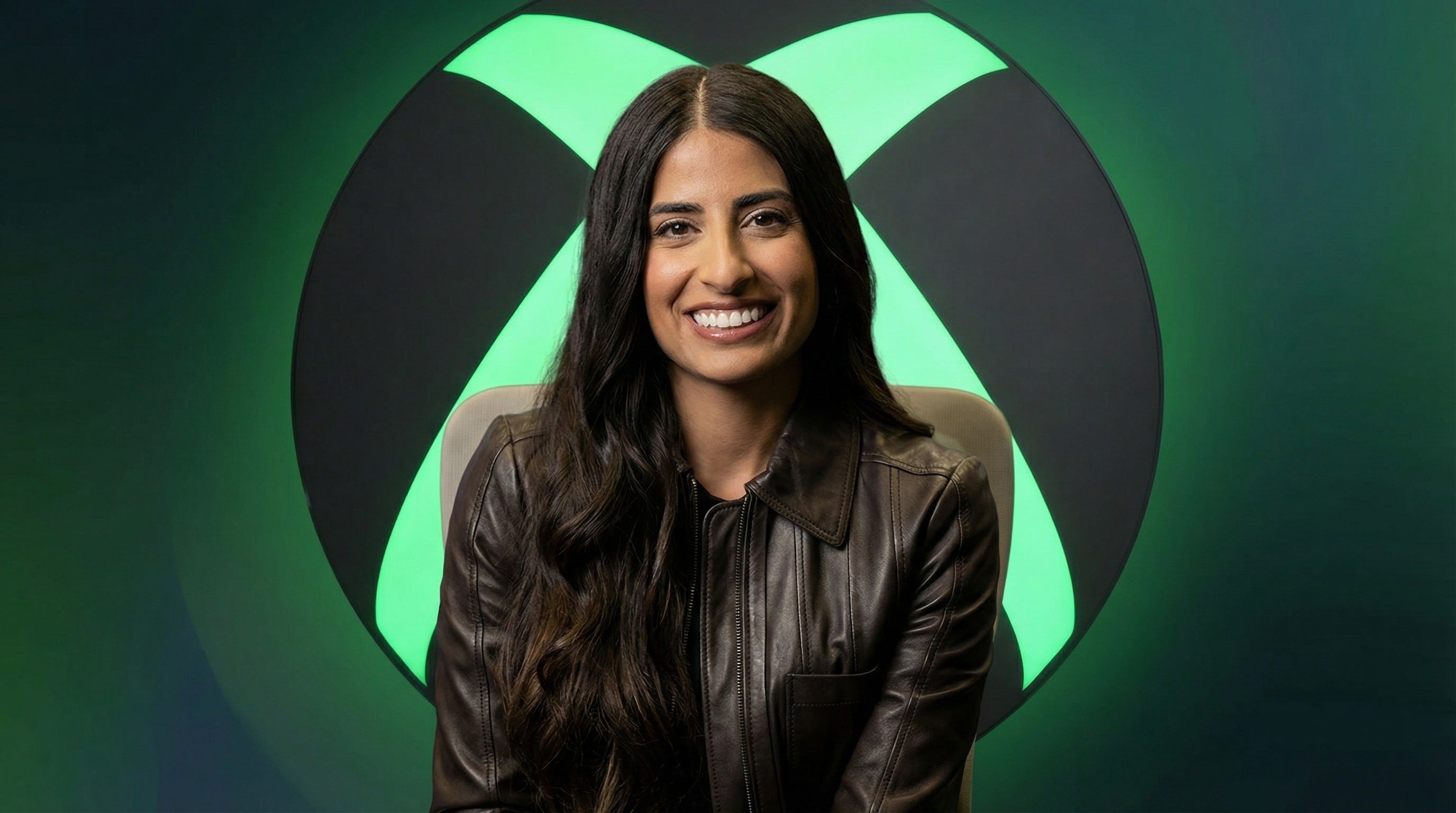
The company is actively building the next-generation Xbox. Under the codename Project Helix, this system will operate as a hybrid console and PC machine. Engineers are baking generative AI rendering directly into the graphics pipeline. Microsoft also reorganized its leadership to support this technical shift. Asha Sharma recently took control of the entire Microsoft Gaming organization. She is an AI executive pulled directly from the Microsoft CoreAI product group rather than a lifelong games industry veteran. Microsoft placed an AI product leader in charge of the platform most likely to reach younger demographics first. Veteran studio chief Matt Booty will manage gaming content underneath her direction.
Younger generations usually adopt new interaction paradigms through video games. They embrace gaming technology long before they use everyday productivity software. Video games introduced touchscreens, voice assistants, and livestreaming to their very first mainstream audiences. Augmented reality glasses might truly become the next personal computing platform. If that new technology needs a Trojan horse to enter younger households, Microsoft already has the perfect entry point. A gaming ecosystem installed on hundreds of millions of televisions, PCs, and handhelds serves as a highly credible on-ramp. It provides a far more realistic path to mainstream adoption than a $3,500 headset that nobody is buying.
Evaluating Microsoft’s Market Position
The company is generating incredible growth numbers while trading at a clear discount compared to nine months ago. Two heavily watched market investors just bet real money that the stock price will recover. We cannot know for sure if augmented reality glasses will create the next massive consumer technology wave. We do know that Azure demand will likely outpace the company’s ability to build data centers over the next year. Microsoft leadership views that sustained demand as a near certainty.
Sources:
Microsoft Corp. FY2026 Q3 Earnings Press Release (SEC Form 8-K) — https://www.sec.gov/Archives/edgar/data/0000789019/000119312526191457/msft-ex99_1.htm
CNBC, “Microsoft (MSFT) Q3 earnings report 2026” — https://www.cnbc.com/2026/04/29/microsoft-msft-q3-earnings-report-2026.html
Benzinga, “Michael Burry’s $700 Microsoft Bet: Should You Copy His LEAP Trade?” — https://www.benzinga.com/Opinion/26/07/60306230/michael-burry-700-dollar-microsoft-bet-should-you-copy-his-leap-trade
CNBC, “Bill Ackman built Microsoft stake in first quarter during sell-off, betting on AI and cloud growth” — https://www.cnbc.com/2026/05/15/bill-ackman-says-he-built-microsoft-position-in-first-quarter.html
Chevron Newsroom, “Chevron Signs 20-Year Power Agreement with Microsoft for West Texas Data Center” — https://www.chevron.com/newsroom/2026/q2/chevron-signs-20-year-power-agreement-with-microsoft-for-west-texas-data-center
Official Microsoft Blog, “Microsoft, NVIDIA and Anthropic announce strategic partnerships” — https://blogs.microsoft.com/blog/2025/11/18/microsoft-nvidia-and-anthropic-announce-strategic-partnerships/
CNBC, “Bill Gates says letting Android win mobile was his ‘biggest mistake’ at Microsoft” — https://www.cnbc.com/2019/06/24/bill-gates-why-microsoft-missed-mobile-and-let-android-get-ahead.html
Official Microsoft Blog, “Asha Sharma named EVP and CEO, Microsoft Gaming” — https://blogs.microsoft.com/blog/2026/02/20/asha-sharma-named-evp-and-ceo-microsoft-gaming/
Game Informer, “New Xbox CEO Asha Sharma Discusses Next Gen Console Codenamed Project Helix” — https://gameinformer.com/2026/03/05/new-xbox-ceo-asha-sharma-discusses-next-gen-console-codenamed-project-helix
Disclaimer:
All views expressed are my own and are provided solely for informational and educational purposes. This is not investment, legal, tax, or accounting advice, nor a recommendation to buy or sell any security. While I aim for accuracy, I cannot guarantee completeness or timeliness of information. The strategies and securities discussed may not suit every investor; past performance does not predict future results, and all investments carry risk, including loss of principal.
I may hold, or have held, positions in any mentioned securities. Opinions herein are subject to change without notice. This material reflects my personal views and does not represent those of any employer or affiliated organization. Please conduct your own research and consult a licensed professional before making any investment decisions.
the $37b ai run rate is the headline, but the april 29 10-q has a number that does more work: commercial remaining performance obligations jumped 99%. that's future contracted revenue already on the books, not a projection. it tells you more about trajectory than the run-rate figure alone.
been tracking this on wiseek since the filing dropped. the gross margin compression looks different when you hold it next to a near-doubling of locked-in contracts. the market is pricing capex drag without fully pricing what that capex is already committed to deliver.