

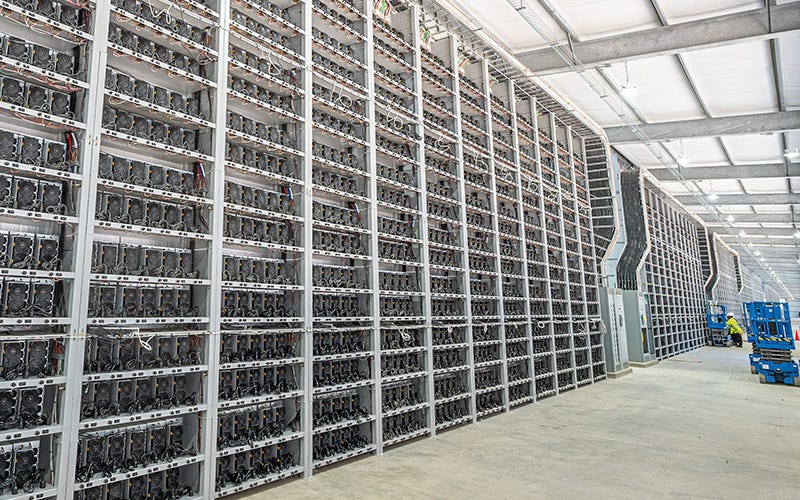
In the dusty scrubland of Corsicana, Texas, a strange industrial metamorphosis is taking place. Amid the mesquite and the cattle ranches stands a facility that consumes enough electricity to power a small European nation. Inside its corrugated steel sheds, thousands of specialized computers whir in unison, performing the repetitive mathematical guesswork required to secure the Bitcoin network. For years, Wall Street viewed this operation and its parent company, Riot Platforms (RIOT), as a speculative gamble on a volatile digital token. They were wrong. As 2026 dawns, bringing with it a fresh wave of geopolitical chaos in South America and a tightening of energy markets in North America, Riot has ceased to be a mere crypto miner. It has evolved into a sophisticated energy arbitrage firm and a critical infrastructure play for the artificial intelligence age.
The case for Riot Platforms is often obscured by the noise of the asset it produces. Bitcoin, having surged past $94,000 this week, naturally dominates the headlines. The catalyst is obvious enough. The collapse of the Maduro regime in Venezuela and the subsequent US intervention have sent shockwaves through the fiat currency markets of the Global South. As capital flees the bolívar and the peso, it seeks refuge in non sovereign assets. This flight to safety has been a boon for the spot price of Bitcoin. Yet to buy Riot simply because Bitcoin is rising is to miss the structural genius of the business.
The Power Paradox
The true value of Riot lies not in the cryptographic puzzles it solves but in the electrons it manages. The company’s defining characteristic is its relationship with ERCOT, the operator of the Texas power grid. Most industrial consumers view electricity as a fixed cost, a burden to be minimized. Riot views it as a tradable commodity.
Through long term power purchase agreements, Riot has secured massive quantities of electricity at prices that are now the envy of the market. Crucially, its operations are interruptible. When a heatwave strikes Dallas or a winter storm freezes the Panhandle, spot electricity prices spike. In these moments, Riot does something counter intuitive. It turns off its machines.
By curtailing its energy usage during peak demand, Riot sells its pre purchased power back to the grid at market rates. In December 2025 alone, the company generated millions in power credits, effectively subsidizing its mining operations to near zero cost. This transforms the company into a virtual power plant. It provides a stabilizing service to the fragile Texas grid while generating a revenue stream that is inversely correlated to Bitcoin mining difficulty. When mining is hard, they trade power. When power is cheap, they mine. This operational optionality creates a floor for the stock that its competitors simply do not possess.
From Hashes to Heuristics
While the energy strategy provides the floor, the pivot to high performance computing provides the ceiling. The market has spent the last two years awarding distinct valuation multiples to different types of data centers. Bitcoin miners trade at roughly 10 times earnings. AI infrastructure plays trade at 50 times. Riot is now bridging this chasm.
The company’s recent strategic update confirms what astute observers have long suspected. A significant portion of the gigawatt scale capacity at Corsicana is being reallocated. Instead of powering ASICs for Bitcoin, these megawatts will soon power GPUs for artificial intelligence.
The logic is impeccable. The world is awash in demand for AI training capacity, yet the bottleneck is no longer chips. It is power. Connecting a new data center to the US grid now takes up to five years due to transmission constraints and bureaucratic sclerosis. Riot already has the power. By pivoting to high performance computing, the company is actively managing its real estate portfolio, swapping a lower margin tenant, Bitcoin mining, for a higher margin one, AI hyperscalers. This transition warrants a fundamental re rating of the stock. It is no longer a proxy for a commodity. It is a landlord for the digital brain.
The Fortress Balance Sheet
In previous crypto cycles, mining companies were characterized by reckless leverage. They borrowed against their machines to buy more machines, creating a fragility that exploded when prices dipped. Riot has avoided this trap.
The company boasts one of the most pristine balance sheets in the sector. With zero long term debt and a large stockpile of unencumbered Bitcoin, valued at nearly $1.7 billion, Riot operates with a level of financial sovereignty that is rare in the small cap space. This HODL strategy acts as a potent internal hedge. As inflation pressures persist and sovereign debt concerns mount globally, the corporate treasury becomes an appreciating asset.
The governance issues that plagued the sector have also eased. The conclusion of the hostile engagement with Bitfarms has left Riot with a strategic stake in a competitor, preserving optionality for future consolidation without the operational headache of a messy integration. It signals a management team that is aggressive but disciplined, willing to push hard but smart enough to know when to settle.
The Geopolitical Premium
Finally, one must return to the situation in Caracas. The destabilization of Venezuela is a grim reminder of the fragility of centralized banking systems in emerging markets. It reinforces the utility of a censorship resistant, borderless store of value. As the United States navigates the complexities of regime change in the region, the utility of Bitcoin as a neutral settlement layer becomes increasingly apparent to institutional allocators.
Riot Platforms is the largest, most efficient, and most politically secure producer of this asset in the Western Hemisphere. It is fully regulated, publicly traded, and domiciled in the jurisdiction, Texas, most friendly to its existence. For investors seeking exposure to the digitization of value without the custody risks of holding the coins themselves, Riot offers a regulated, liquid vehicle.
Conclusion
The market currently prices Riot Platforms as if it were still 2021, a speculative lever on the price of Bitcoin. This view is antiquated. It ignores the energy trading desk that monetizes grid volatility. It ignores the gigawatt scale power portfolio that is being repriced for the AI era. It ignores the fortress balance sheet that insulates the firm from the very volatility it exploits.
Riot has matured from a wildcat driller into a diversified industrial conglomerate. It mines digital gold, it trades electricity, and it hosts the infrastructure of the future. In a world defined by monetary debasement and energy scarcity, owning the company that sits at the intersection of both is not just a speculation. It is a rational allocation of capital.
Bullish
Disclaimer:
All views expressed are my own and are provided solely for informational and educational purposes. This is not investment, legal, tax, or accounting advice, nor a recommendation to buy or sell any security. While I aim for accuracy, I cannot guarantee completeness or timeliness of information. The strategies and securities discussed may not suit every investor; past performance does not predict future results, and all investments carry risk, including loss of principal.
I may hold, or have held, positions in any mentioned securities. Opinions herein are subject to change without notice. This material reflects my personal views and does not represent those of any employer or affiliated organization. Please conduct your own research and consult a licensed professional before making any investment decisions.