

PYPL 0.00%↑
TSLA 0.00%↑
SPCX 0.00%↑
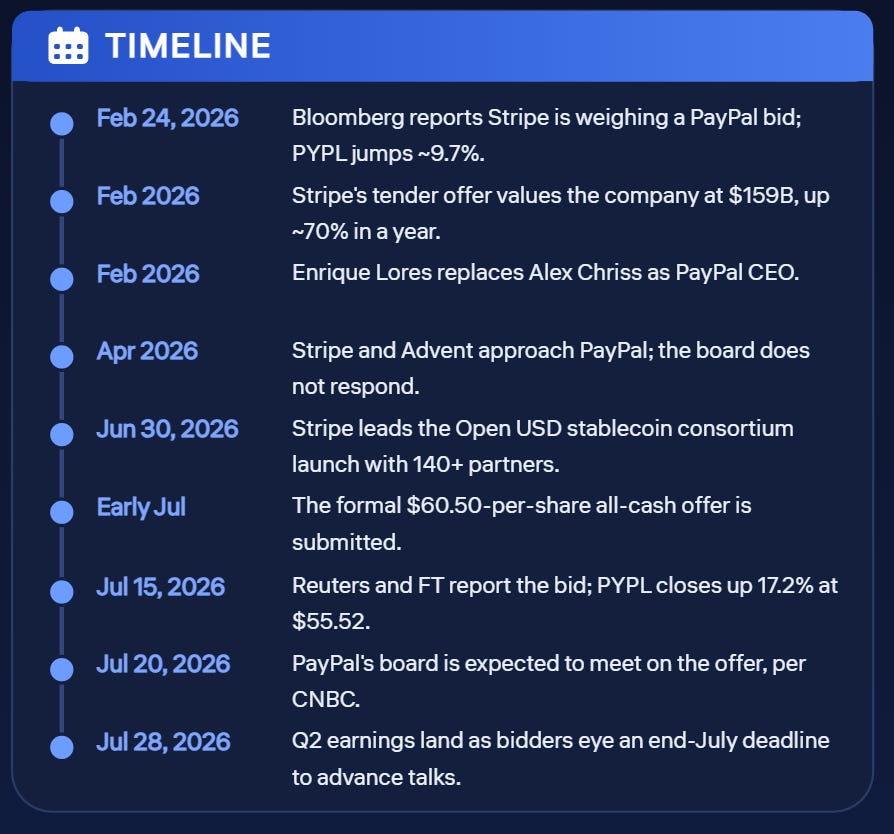
Speculation surrounding PayPal Holdings recently transformed into a concrete offer. Stripe partnered with private equity firm Advent International to propose a cash buyout of $60.50 per share. This joint bid values the payment pioneer at more than $53 billion. It carries a 28 percent premium over the prior closing price and relies on roughly $50 billion in committed bank financing. The specific structure of this offer looks less like a final deal and more like an opening move.
PayPal has not yet accepted or rejected the proposal. The company is actively working with Goldman Sachs and Evercore to review all strategic options. These alternatives range from a potential sale to breaking up the business. Whenever a major corporation brings in outside bankers to weigh options without immediately accepting a bid, it sets the stage for other buyers to enter the picture before any agreement is locked down.
Why a Rival Takeover Bid for PayPal Remains Highly Probable
A close look at market valuations reveals a massive gap between these two financial technology companies. PayPal currently has a depressed market cap that sits awkwardly next to the roughly $159 billion private valuation held by Stripe. This steep difference makes PayPal look like an absolute bargain to well-funded acquirers. Analysts mapping out the payment landscape note that the list of realistic rivals is small but far from empty. Most large payment processors like Global Payments, Fidelity National Information Services, and Fiserv either lack the financial capacity or are already occupied with their own deals. Card networks like Visa and Mastercard remain unlikely to want the regulatory headache of buying another network. This specific environment leaves plenty of room for private equity consortiums or other strategic buyers who want to move quickly once PayPal signals a willingness to sell.
Once a corporate board publicly engages financial advisors on strategic alternatives, the market usually interprets the silence as an open invitation. A second suitor could step in and top the $60.50 offer without needing a massive premium to be taken seriously. The stock has simply fallen so far from its previous highs that a slightly higher number could easily look appealing.
The true fuel behind potential competing offers is the historical valuation. PayPal saw its market value peak near $360 billion back in 2021 before sinking to a range of $36 billion to $43 billion earlier this year. The current 28 percent premium still values the business far below where it traded just a few years ago. Some shareholders view the $60.50 price tag as a baseline rather than a ceiling. A competing offer would not require the same level of aggressive ambition that Stripe brings to the table for a new entrant to justify a deal.
How Recent Leadership Changes Impact the PayPal Board
Recent corporate updates have added pressure to the boardroom. PayPal issued disappointing profit guidance for 2026 and replaced CEO Alex Chriss. The board then brought in Enrique Lores from HP to serve as the new president and CEO. Experiencing leadership turnover in the middle of active takeover talks often projects uncertainty instead of stability. It feeds a growing market narrative that the board has struggled to maintain a clear strategic direction while competitors like Apple Pay and Google Pay chip away at the core business. An unsettled board often looks like a very willing seller.
Some optimistic shareholders argue the immense scale of PayPal justifies a much higher price in a full sale process. The company still boasts hundreds of millions of active accounts, owns Venmo, and generates real free cash flow. These bulls suggest the stock could reasonably command $100 a share if heavy competing interest actually materializes. Readers should treat this specific number as an educational view held by certain shareholders rather than a price target from PayPal, Stripe, or any bank involved.

Elon Musk and X Emerge as Plausible Bidding Candidates
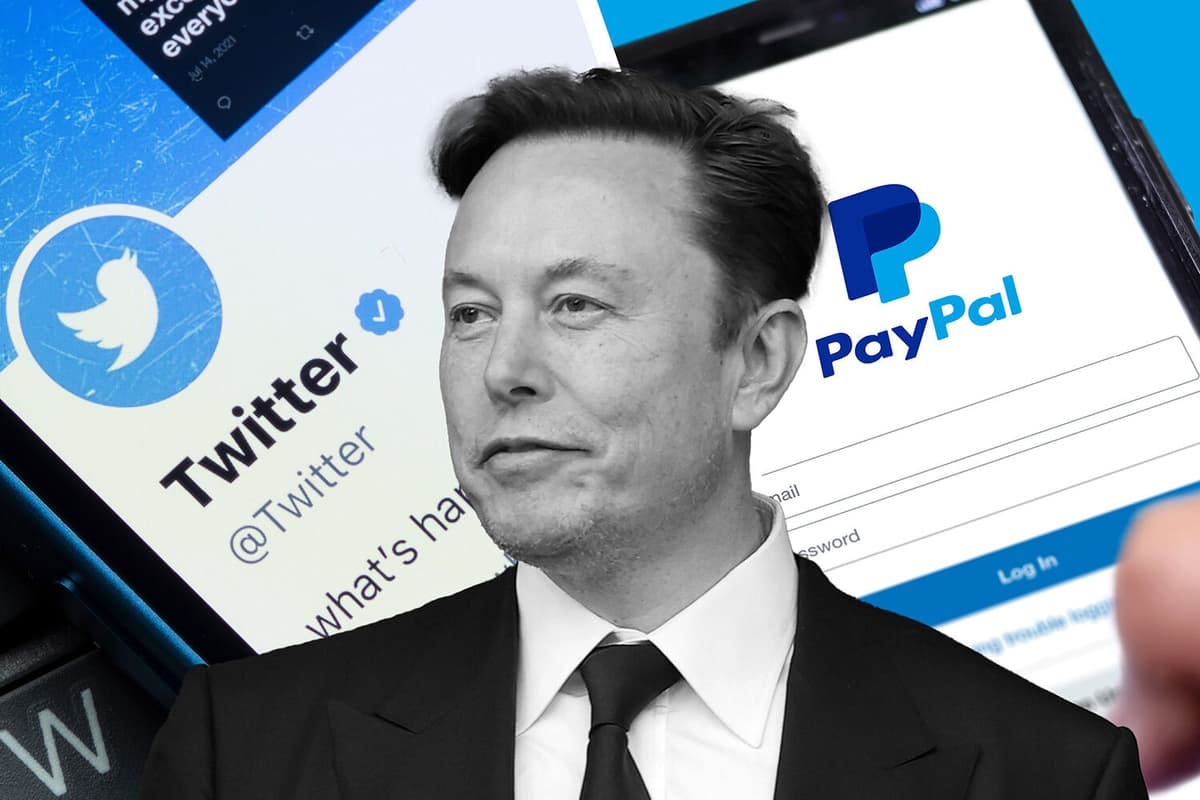
One highly plausible candidate for a competing bid is Elon Musk through his X platform. Musk cofounded the company that eventually became PayPal through his early startup X.com. Many early PayPal alumni later went on to found or lead major enterprises like Tesla and SpaceX. Musk fully exited the business when eBay acquired the company in 2002. A return to his roots makes strategic sense right now.
Musk has been openly building X into an everything app designed to handle communication, transportation, social network, and payments. Acquiring PayPal would instantly provide the massive global payment infrastructure his vision requires. Folding PayPal into X and integrating it alongside his other ventures like xAI or even Tesla robotaxi networks creates a powerful financial ecosystem. Market watchers now see Musk and his well-funded entities as very realistic players in a potential bidding war.
Disclaimer:
All views expressed are my own and are provided solely for informational and educational purposes. This is not investment, legal, tax, or accounting advice, nor a recommendation to buy or sell any security. While I aim for accuracy, I cannot guarantee completeness or timeliness of information. The strategies and securities discussed may not suit every investor; past performance does not predict future results, and all investments carry risk, including loss of principal.
I may hold, or have held, positions in any mentioned securities. Opinions herein are subject to change without notice. This material reflects my personal views and does not represent those of any employer or affiliated organization. Please conduct your own research and consult a licensed professional before making any investment decisions.