

QCOM 0.00%↑
HIMX 0.00%↑
VUZI 0.00%↑
KOPN 0.00%↑
AMBQ 0.00%↑
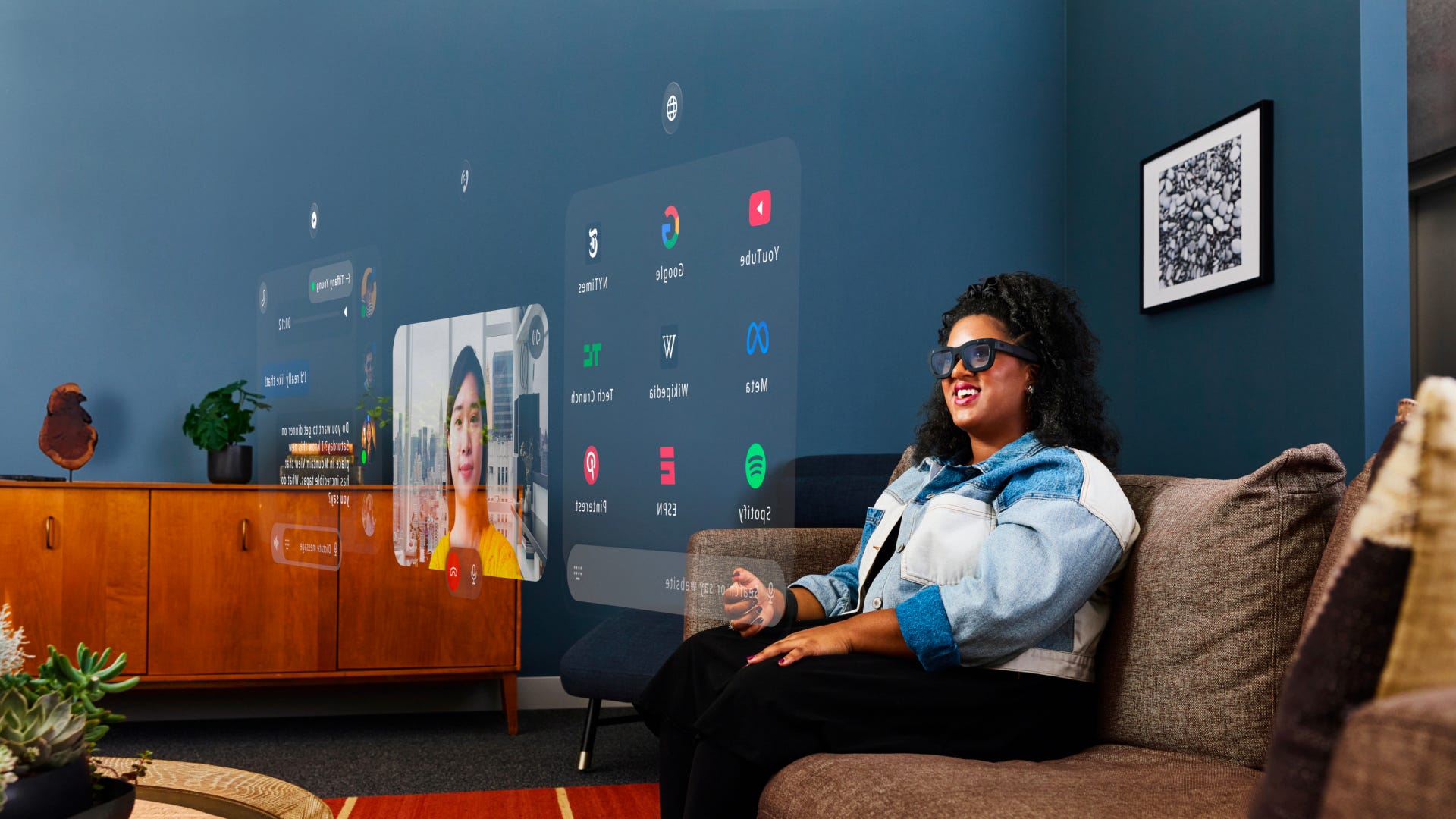
The smart glasses market is moving fast. Market data from IDC shows a 211.2% growth in 2025. They expect another 33.5% jump in 2026 and a 26.5% compound annual growth rate through 2030. Tech giants are already setting the stage, with Apple reportedly planning a hardware reveal this fall. Google and Samsung recently previewed their Android XR glasses at the I/O 2026 event. Snap confirmed a consumer launch powered by Qualcomm for later this year. Meta has already shipped an estimated 7 million Ray-Ban AI glasses in 2025 alone.
We are watching the early infrastructure build of a completely new computing platform. Smart glasses are aiming to replace the phone in your hand. The companies positioned to benefit most do not make the frames. They build the processors, the optics, and the microdisplays.
Here are five stocks ranked by their immediate role in the augmented reality supply chain. Their recent earnings reports tell a clear story about where the hardware market is heading.
1. Qualcomm (QCOM) The Core Processor of AR Wearables
Qualcomm holds a dominant position in AR processing. The company’s AR1 chip already runs the popular Ray-Ban Meta glasses. Samsung confirmed its upcoming Android XR device relies on Qualcomm silicon. Snap signed a multi-year strategic agreement in April 2026 to power its upcoming consumer Specs.
CEO Cristiano Amon addressed this momentum during the Q2 FY2026 earnings call. He noted that the second half of the year will bring a significant increase in new smart glasses. He linked these product launches with rapid progress in AI to signal a major shift in customer demand.
The technological edge here relies on platform design. The AR1 family is built exclusively for lightweight wearables that stay on all day. This keeps battery life, heat management, and AI processing optimized for glasses instead of bulky headsets. Competitors creating general-purpose chips will need years of research to match this efficiency. Amon publicly predicts the industry could ship 100 million AI-equipped glasses annually by 2026 or 2027.
Investors view AR as an upcoming catalyst for Qualcomm rather than the entire thesis. The company has a massive valuation exceeding $120 billion with strong diversification in the automotive and PC markets. Institutional interest is growing steadily. Marshall Wace LLP heavily accumulated AR supply chain stocks throughout 2025. Major analysts upgraded Qualcomm shortly after the Snap deal in April 2026 based on Fintel 13F filings.
2. Himax Technologies (HIMX) The Hidden Display Engine
Himax provides the critical microdisplay technology that puts digital images directly in front of your eye. Their Liquid Crystal on Silicon (LCoS) solution dominates the see-through AR market.
The company announced a joint reference design with Vuzix at CES 2026 and partnered with AUO for waveguide-integrated displays. By May 2026 at Display Week, Himax revealed a Dual-Edge Front-lit LCoS microdisplay. This component hits 350,000 nits of brightness while drawing only 200mW of power. It delivers contrast ratios above 1000:1 using Dynamic Light Modulation technology.
CEO Jordan Wu confirmed during the Q1 2026 earnings call that Himax is working with waveguide partners across China, Europe, Israel, Japan, Taiwan, and the United States. They are bundling these technologies into complete display systems for AR glasses.
Himax is selling integrated display systems rather than isolated chips. They have secured mass production contracts and continue to add customers to their pipeline. The core engineering challenge in AR is balancing brightness, power use, and device weight. Himax packed its 350,000-nit solution into a 0.09 cubic centimeter module weighing under one gram. The market remains in its early stages. Display glasses shipped roughly 912,000 units in 2025. Growth should accelerate rapidly when major tech firms launch full AR products between 2027 and 2028.
3. Vuzix (VUZI) The Optical Waveguide Pioneer
Vuzix operates as a direct investment in AR infrastructure. They manufacture the waveguides that direct light from a microdisplay into the user’s eye. They also build complete smart glasses for enterprise clients.
Revenue surged 76% year-over-year in Q4 2025 driven by M400 smart glasses and engineering services. CEO Paul Travers shared an optimistic outlook for 2026. He expects the waveguide and original equipment manufacturing business to climb every quarter and eventually surpass their enterprise revenues.
A major industry validation came when Quanta Computer completed a $20 million strategic investment in Vuzix. Quanta is one of the largest electronics manufacturers globally. They set up a joint supply agreement that positions Vuzix waveguides as the foundation for future product lines. Travers also confirmed active projects with Amazon and a major automotive company.
Vuzix sets itself apart with an ultra-thin 0.35mm waveguide architecture that supports prescription lenses. They use scalable manufacturing techniques while competitors struggle with thicker and more expensive glass designs. Institutional buyers have shown aggressive interest. MarketBeat data from 2025 to 2026 shows 58 institutional buyers compared to 15 sellers. Total institutional inflows reached $22.74 million against $3.44 million in outflows. Marshall Wace LLP expanded its position by 133.5% in the third quarter of 2025.
4. Kopin Corporation (KOPN) Bridging Defense and Consumer Tech
Kopin flies under the radar in the display market. They stand as the only volume producer of MicroLED microdisplays in the United States. Omdia reports that Apple is targeting this specific next-generation display technology for its 2028 AR glasses.
Kopin secured a $21.5 million thermal imaging production contract in Q1 2026. They also received $5.6 million in orders for European pilot helmet displays. In April 2026, a partnership with Fabric.AI brought a $15 million purchase order to develop optical interconnect technology for AI data centers.
Kopin landed a $23 million investment and development deal with THEON International. This leading defense firm allocated $8 million specifically to co-develop military-grade AR display technology. CEO Michael Murray noted that defense departments globally are expanding budgets to advance security technologies. These defense contracts effectively subsidize Kopin’s research and development for future consumer applications.
Supply chain security is becoming a priority for global electronics. As consumer AR moves toward advanced displays after 2027, Kopin offers the only domestic alternative to overseas suppliers. The consumer timeline remains early but defense funding provides steady revenue while the broader AR market matures.
5. Ambiq Micro (AMBQ) The Battery Efficiency Expert
Smart glasses require reliable battery life to function properly all day. Ambiq focuses entirely on solving power consumption. Their patented technology operates transistors at incredibly low voltages. Competitors simply cannot match this level of energy efficiency using traditional methods.
The fourth quarter of 2025 was a turning point. The company estimated that over 80% of their shipped units were running AI algorithms. They achieved their highest quarterly revenue ever with a 14.2% sequential growth. Gross margins expanded by nearly 20 percentage points year-over-year. Management projected strong top-line growth heading into 2026.
Ambiq revealed the Atomiq processor at CES 2026. They designed this chip specifically for smart cameras, AR glasses, and industrial robots that need constant AI processing without draining the battery. They followed up in March 2026 with a preview of their next-generation 12nm platform at Embedded World.
Ambiq went public in July 2025. The company remains in a very early growth stage and has not yet reached profitability. Institutional investors are paying close attention to their unique technology. ATREIDES MANAGEMENT LP purchased 684,307 shares in Q3 2025. Quiver Quantitative data shows 71 institutional investors added shares recently with zero firms decreasing their positions.
The Broad Future of Wearable Computing
Bloomberg reporter Mark Gurman noted in April 2026 that Apple is testing four smart glasses designs. Google and Samsung are moving forward with fashion partners like Warby Parker and Gentle Monster. Snap will introduce its Qualcomm-powered consumer hardware later this year.
IDC expects global XR device shipments to grow 33.5% in 2026. The vast majority of this expansion will come directly from smart glasses. The broader market should maintain a 26.5% compound annual growth rate through 2030.
The companies supplying the internal components do not need a specific tech giant to win the hardware race. They only need the category itself to grow. Building the processors, displays, and power systems is a profitable strategy regardless of whose logo sits on the frame. Every company listed here operates inside multiple ecosystems at the same time. The infrastructure build is happening right now across the global supply chain.
Disclaimer:
All views expressed are my own and are provided solely for informational and educational purposes. This is not investment, legal, tax, or accounting advice, nor a recommendation to buy or sell any security. While I aim for accuracy, I cannot guarantee completeness or timeliness of information. The strategies and securities discussed may not suit every investor; past performance does not predict future results, and all investments carry risk, including loss of principal.
I may hold, or have held, positions in any mentioned securities. Opinions herein are subject to change without notice. This material reflects my personal views and does not represent those of any employer or affiliated organization. Please conduct your own research and consult a licensed professional before making any investment decisions.