

Global semiconductor production is changing fast. Political tensions are reshaping how basic parts reach buyers all over the world. Advanced AI chips get most of the attention in the news. Yet a massive battle is happening over the essential building blocks of modern technology. Diodes, transistors, and MOSFETs keep cars and factories running.
Right in the middle of this shift is Nexperia. This Dutch company is owned by China’s Wingtech Technology. Today, Nexperia is going through a massive operational breakdown. As the company deals with government action and internal splits, Diodes Incorporated (DIOD) is stepping up. Diodes is aggressively taking market share and becoming the proven, safe choice for global buyers.
A Stand-Off Over Supply
The trouble at Nexperia is highly unusual. It stems from a direct clash between the Netherlands and China. In late 2025, the Dutch government took severe action over national security concerns. They used the Goods Availability Act to seize control of Nexperia’s European management. The government suspended Chinese CEO Zhang Xuezheng and put their own officials in charge.
Beijing hit back quickly. The Chinese Ministry of Commerce blocked exports from Nexperia’s massive assembly plant in Dongguan, China. This single facility handles 70% to 80% of Nexperia’s total output. Without these parts, European and American car makers suddenly lost their supply chain.
Things got worse in early 2026. The legal fight turned into a complete operational blackout. Nexperia’s European headquarters shut down all IT accounts for staff in China. Workers lost access to global design databases and SAP systems. In response, the Chinese branch switched entirely to domestic wafers. This created a huge problem with part authenticity. Nexperia’s European leaders sent out a global warning. They stated they could no longer guarantee the quality of chips coming from their own Chinese factories. They also could not confirm if the parts still met AEC-Q100 or Q101 automotive standards.
Diodes Incorporated Steps Up
Diodes started 2026 in a very strong position. The company posted $1.48 billion in revenue for 2025. This was a 15.4% increase from the previous year. CEO Gary Yu has set bold financial goals for the next three years. By 2028, Diodes aims for $2 billion in annual revenue and $700 million in gross profit. The company also expects a non-GAAP earnings per share of more than $4.00.
This growth comes from focusing on highly profitable areas. For AI and computing, Diodes is now a crucial supplier. The company increased its parts per AI server to 103 units in 2025. Data centers are buying more of their PCIe 5.0 and 6.0 clock solutions and USB-C source switches. This demand pushed computing revenue up by 25% in 2025.
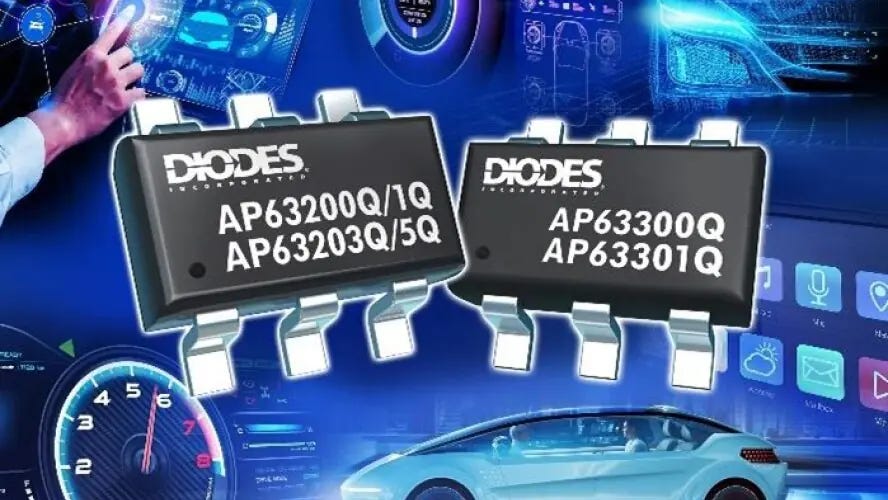
The automotive market is growing even faster. Car sector revenue jumped 20% for the full year of 2025. Diodes now has $239 worth of addressable content in each vehicle. The company is winning steady contracts for advanced driver assistance systems, entertainment platforms, and electric vehicle power systems.
Winning New Customers
The chaos at Nexperia has forced manufacturers to look elsewhere. Global brands want reliable parts with clear origins. Automakers like Volkswagen, BMW, and Mercedes-Benz depend on Nexperia for simple but vital chips used in windows and steering. Now, they are moving their orders to new suppliers.
Diodes is working hard to replace Nexperia on a permanent basis. Company leaders confirmed they are stepping in to help customers stranded by Nexperia’s supply cuts. This is especially true for car makers and communication companies.
Diodes competes directly with Nexperia in high-volume products. These include discrete diodes, MOSFETs, and logic ICs. Diodes uses its Super Barrier Rectifier and Schottky barrier diode lines to replace Nexperia parts in engine controls and power systems. At the same time, Diodes is moving away from cheap, basic commodities. They are focusing on Application-Specific Standard Products. These specialized parts offer higher value and protect the company from sudden price drops.
Making Parts In-House
A big part of the Diodes strategy is making its own products. The company is phasing out expensive outside manufacturing agreements. Instead, they are moving production to their own plants. This includes their SP-fab in Maine and the G-fab in the United Kingdom.
By making more parts internally, Diodes expects to lower unit costs and secure its supply chain. Gary Yu noted that this shift will boost gross profit margins starting in 2027 as factory production ramps up. This internal focus protects Diodes from the political clashes and market swings currently hurting its rivals.
The New Reality
The Nexperia crisis has shaken the global market. It permanently changed how the industry manages chip supplies. Buyers now care deeply about where and how their parts are made. Diodes Incorporated is not just filling a temporary hole in the market. By offering proven, high-quality parts made largely in-house, Diodes is building a stronger, more profitable business. The old era of purely cheap supply chains is gone. Resilience and secure production are the new priorities. In this new reality, Diodes stands ready to lead.
Disclaimer:
All views expressed are my own and are provided solely for informational and educational purposes. This is not investment, legal, tax, or accounting advice, nor a recommendation to buy or sell any security. While I aim for accuracy, I cannot guarantee completeness or timeliness of information. The strategies and securities discussed may not suit every investor; past performance does not predict future results, and all investments carry risk, including loss of principal.
I may hold, or have held, positions in any mentioned securities. Opinions herein are subject to change without notice. This material reflects my personal views and does not represent those of any employer or affiliated organization. Please conduct your own research and consult a licensed professional before making any investment decisions.