

The conversation around artificial intelligence has moved past the initial excitement. We are now seeing a shift toward industrial construction. The focus is on the physical build-out of the technology. This involves the factories, power systems, and machinery required to operate the next generation of computing.
Market observers in early 2026 are paying close attention to the supply chain. The following nine companies provide the essential components and infrastructure for the AI economy. Here is a look at where they sit in the technology stack and the recent developments driving their current market activity.
Taiwan Semiconductor Manufacturing (TSM) TSM 0.00%↑
Stack Position: Manufacturing (Foundry)
TSMC holds a distinct position as the world’s primary foundry. They manufacture the chips designed by other major technology firms.
Recent Market Developments:
The company released its earnings report on January 15, 2026. The results showed record profits driven largely by high-performance computing. This segment has now overtaken smartphones as their primary revenue driver.
Industry attention is currently focused on their “CoWoS” advanced packaging technology. This is the specific process used to combine AI chips and memory. TSMC is currently doubling this capacity to address a backlog of orders from major clients like Nvidia and AMD. Furthermore, production for their 3-nanometer chips is fully booked. The data indicates that access to TSMC’s manufacturing lines remains a fundamental requirement for the entire semiconductor industry.
ASML Holding (ASML) ASML 0.00%↑
Stack Position: Manufacturing (Lithography)
ASML manufactures the Extreme Ultraviolet (EUV) lithography systems required to print advanced microchips. These machines use light to create circuits on silicon at microscopic scales.
Recent Market Developments:
The semiconductor sector is currently monitoring the rollout of ASML’s “High-NA” EUV machines. These next-generation tools are priced over $350 million. They are necessary for printing chips at the 2nm node and beyond. Intel has taken delivery of the first units to advance its manufacturing capabilities.
Despite discussions regarding export regulations, the company reports a significant order backlog. Financial updates suggest the industry transition to smaller chip nodes is proceeding quickly. This technical shift relies on ASML’s proprietary equipment, as physics limits the capabilities of older tools.
Applied Materials (AMAT) AMAT 0.00%↑
Stack Position: Manufacturing (Materials Engineering)
Applied Materials produces equipment that modifies materials at an atomic level. Their machinery handles the deposition, removal, and shaping of chip layers.
Recent Market Developments:
Current market analysis highlights the shift to “Gate-All-Around” (GAA) transistors. This new chip architecture is required as transistors shrink, but it demands complex new manufacturing steps. Applied Materials has reported increased value capture per wafer because these processes are material-intensive.
Additionally, the company is seeing growth in “advanced packaging.” As manufacturers stack “chiplets” to improve performance, the demand for materials to bond and wire these components has increased. Recent earnings calls have identified this segment as a key area of expansion.
ACM Research (ACMR) ACMR 0.00%↑
Stack Position: Manufacturing (Cleaning & Supply Chain)
ACM Research specializes in wafer cleaning technologies. As chip features become smaller, removing microscopic particles becomes increasingly critical to prevent defects.
Recent Market Developments:
This company is often viewed through the lens of the expanding Chinese semiconductor supply chain. As domestic capacity grows in the region, demand for local equipment has followed.
ACM Research has reported gaining market share with its proprietary “SAPS” cleaning technology. This method uses sound waves to clean wafers without damaging fragile structures. The company continues to post growth numbers driven by this technology and its integration into the regional manufacturing ecosystem.
Nova Ltd (NVMI) NVMI 0.00%↑
Stack Position: Manufacturing (Metrology)
Nova specializes in metrology. This involves the measurement and inspection of chips during the manufacturing process to ensure accuracy.
Recent Market Developments:
The production of High Bandwidth Memory (HBM) has become a primary driver for Nova. HBM involves stacking multiple layers of memory chips. Precise alignment is essential, as defects can ruin the entire unit.
Industry data indicates that manufacturers are increasing investment in metrology tools to manage yields for these complex stacks. As chip designs move from 2D to 3D structures, the frequency and intensity of measurements have increased. Nova’s tools are integrated into production lines to detect defects in real-time, a capability that directly impacts foundry profitability.
Micron Technology (MU) MU 0.00%↑
Stack Position: Hardware (Memory)
Micron produces the memory hardware essential for data processing. This includes High Bandwidth Memory (HBM), which is installed adjacent to the GPU to improve speed.
Recent Market Developments:
Supply constraints are the central theme in recent reports from Micron. Management has confirmed that their HBM3E memory production is effectively sold out for the entirety of 2025 and much of 2026.
This scarcity suggests strong pricing power for the company. While traditional memory markets are often volatile, the specialized nature of AI memory has created a different dynamic. Micron is also noting a recovery in its standard storage business for personal computers and smartphones.
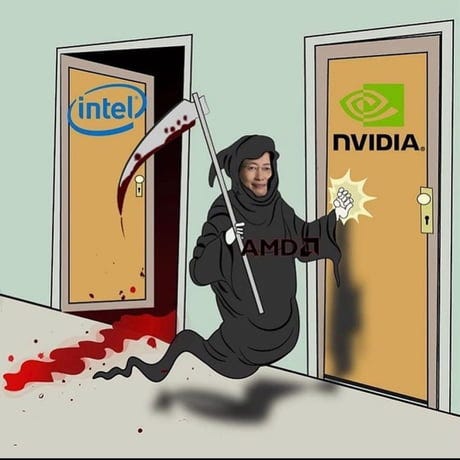
Advanced Micro Devices (AMD) AMD 0.00%↑
Stack Position: Hardware (Compute)
AMD designs high-performance processors and GPUs. They compete directly in the data center market to provide the computing power for AI workloads.
Recent Market Developments:
At CES 2026, the company unveiled its next-generation MI455X GPU and the “Helios” rack-scale platform, signaling a definitive shift toward widely deployable, high-performance inference solutions.
Major technology corporations continue to diversify their infrastructure with AMD hardware. Beyond existing partners like Microsoft and Meta, OpenAI has formed a strategic partnership to deploy AMD Instinct GPUs in late 2026, and Oracle is planning an MI450-powered supercluster. On the software front, the release of ROCm 7.2 has delivered substantial optimizations, with benchmarks showing over 5x performance gains in specific AI workloads, solidifying AMD’s position as a critical alternative supplier in the compute market.
Pure Storage (PSTG) PSTG 0.00%↑
Stack Position: Infrastructure (Storage)
Pure Storage offers all-flash storage solutions. Their hardware replaces traditional spinning hard drives with faster, more efficient flash memory.
Recent Market Developments:
Energy efficiency has become a primary focus for data center operators. Reports indicate that power availability is becoming a limiting factor for server expansion.
Pure Storage has released data demonstrating that their flash arrays consume up to 80% less power than traditional hybrid storage systems. This metric is significant for hyperscalers facing strict energy constraints. Recent partnership announcements suggest that power reduction is a key factor in contract wins for the company.
Meta Platforms (META) META 0.00%↑
Stack Position: Application & Model Layer
Meta Platforms operates as a major customer in this ecosystem. The company purchases vast amounts of infrastructure to build and train its models.
Recent Market Developments:
Meta is currently constructing one of the world’s largest AI compute clusters. Mark Zuckerberg has confirmed the acquisition of hundreds of thousands of GPUs to train the next generation of Llama models.
Financial results show that this capital expenditure is influencing their core business. AI algorithms are now optimizing advertising delivery, which has improved efficiency for advertisers and increased revenue for Meta. By releasing Llama as open source, the company is also establishing its software architecture as a standard for developers.
The Bottom Line
The AI sector is maturing. The focus has shifted from speculative concepts to companies with tangible order books and defined roles in the industrial supply chain.
From the metrology instruments of Nova to the memory chips of Micron and the storage arrays of Pure, these nine companies represent the physical foundation of the industry. Investors and analysts continue to monitor their earnings and production updates as indicators of the broader market’s health.
Disclaimer:
All views expressed are my own and are provided solely for informational and educational purposes. This is not investment, legal, tax, or accounting advice, nor a recommendation to buy or sell any security. While I aim for accuracy, I cannot guarantee completeness or timeliness of information. The strategies and securities discussed may not suit every investor; past performance does not predict future results, and all investments carry risk, including loss of principal.
I may hold, or have held, positions in any mentioned securities. Opinions herein are subject to change without notice. This material reflects my personal views and does not represent those of any employer or affiliated organization. Please conduct your own research and consult a licensed professional before making any investment decisions.