

NVDA 0.00%↑
MSFT 0.00%↑
GOOGL 0.00%↑
META 0.00%↑
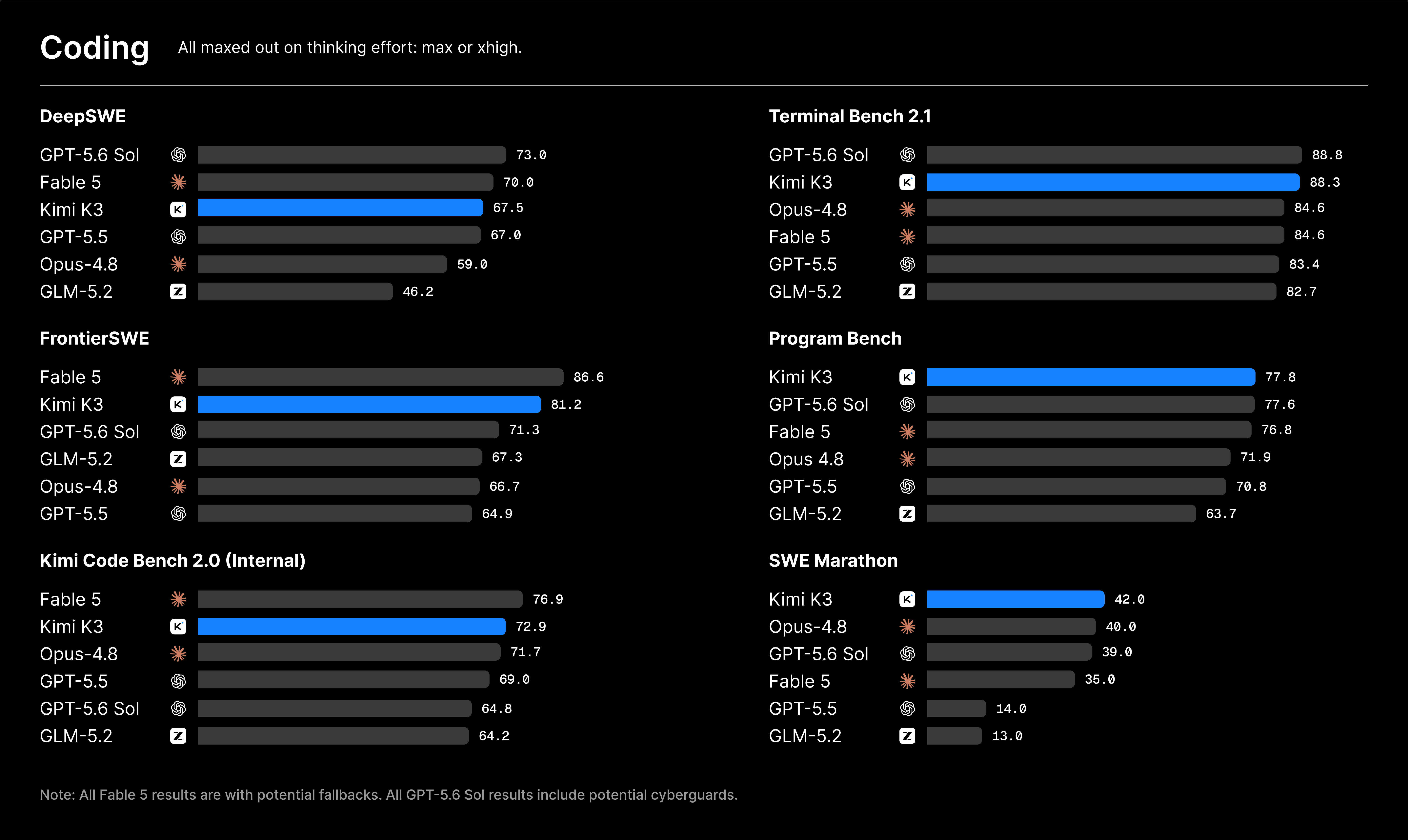
A startup valued at a tiny fraction of Anthropic recently released a highly competitive artificial intelligence model. On July 16, Beijing-based Moonshot AI launched Kimi K3. This is a massive 2.8-trillion-parameter open-weight model featuring a one-million-token context window. The top tier of artificial intelligence just became much more crowded.
Kimi K3 Performance and Benchmark Scores
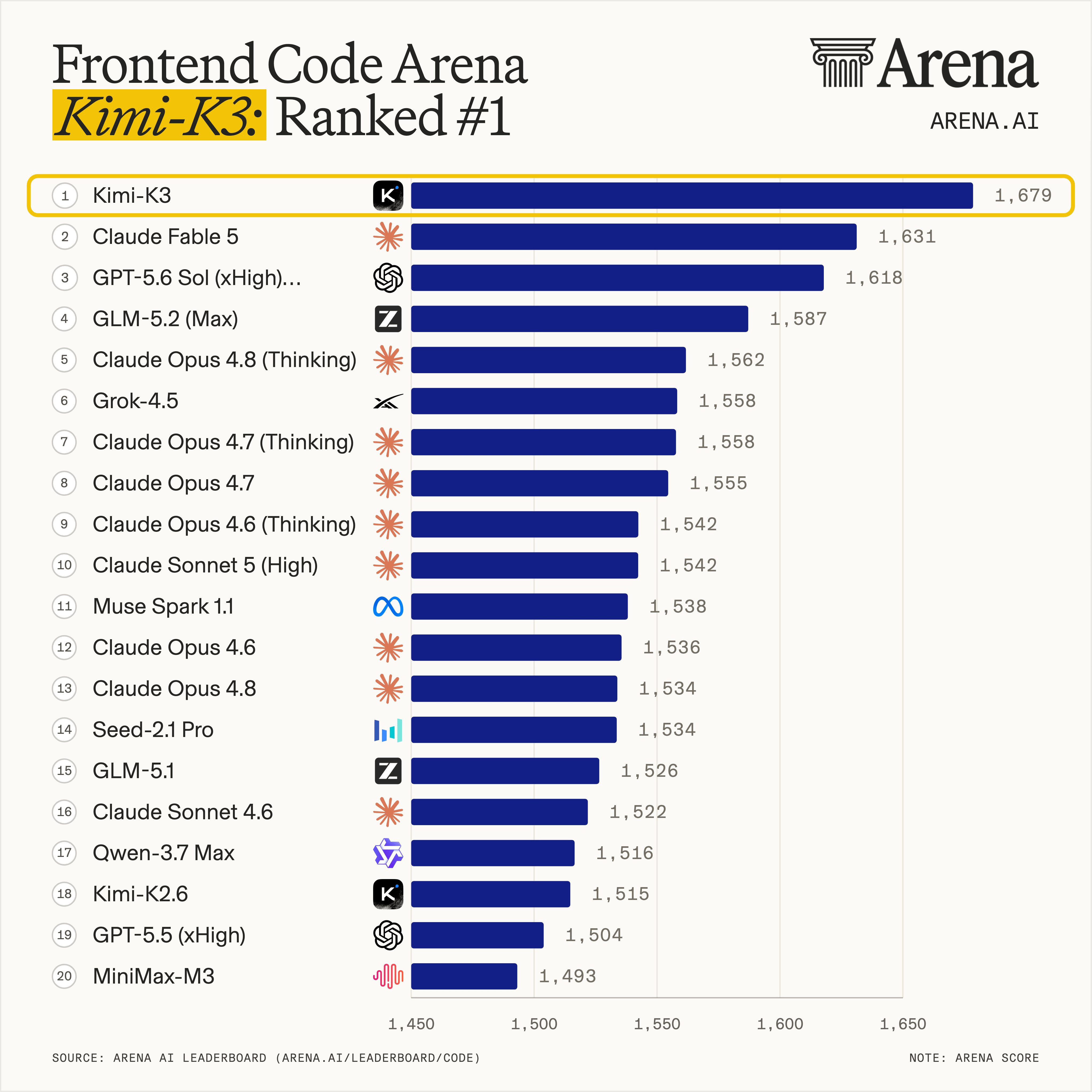
Kimi K3 made a strong debut. It took the number one spot on LMArena’s Frontend Code Arena with an Elo rating of 1679. This score pushed it past Anthropic’s Claude Fable 5. The new model marks a massive seventeen-place jump from the earlier K2.6 version. Independent testers rank Kimi K3 right alongside Claude Opus 4.8 and GPT-5.5. It sits just one step behind Claude Fable 5 and GPT-5.6 Sol. Anthropic still leads the broader market. Fable 5 remains the top model available to the public. Meanwhile, Anthropic keeps its highly capable Mythos 5 restricted within the Glasswing program for cybersecurity work. Experts widely consider Mythos 5 the most powerful model built to date. Yet the performance gap between these top-tier systems is shrinking rapidly. A distance that used to take years to close now takes only months.
Comparing AI Startup Valuations and Revenue Growth
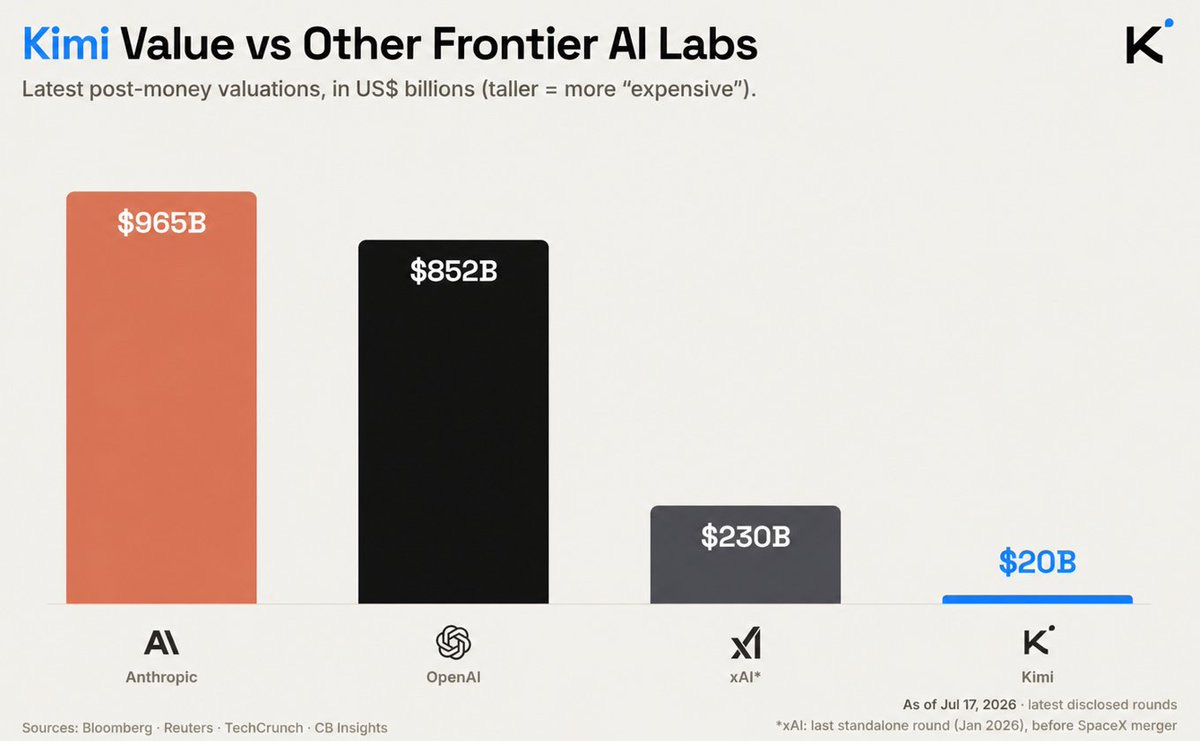
The financial divide between these companies is massive. Investors recently valued Anthropic at roughly $965 billion following a $65 billion Series H funding round. OpenAI currently sits near $852 billion after raising a record $122 billion. On the other side, Moonshot AI closed a $2 billion round in May. That brought its valuation to $20 billion. This figure represents a fivefold increase from its mark at the end of 2025. The startup is already discussing a new funding round at a $30 billion valuation. A company worth roughly two to three percent of Anthropic just released a system that rivals the most expensive models on the market. Moonshot has also pushed its annual recurring revenue past $200 million, and that number continues to grow. That financial ratio highlights a major shift in the industry.
The Real Competitive Advantage in Artificial Intelligence
Building top-tier artificial intelligence models resembles high-end cooking. A famous chef might invent a stunning dish, but other kitchens will replicate it within a single season. Technique always spreads. In the tech sector, recipes travel through academic papers and open-source weights. Moonshot plans to release the K3 weights by late July. Talent also moves frequently between competing companies, taking knowledge with them. What fails to spread is the physical and commercial infrastructure. Real power lies in data centers, compute contracts, and global distribution. It lives in brand recognition and the operational strength required to serve hundreds of millions of users reliably. OpenAI boasts 900 million weekly users and relies on a massive Amazon-Nvidia computing pipeline. These assets represent a superior machine for delivering artificial intelligence. Many top labs carry valuations assuming their scientific research provides a permanent shield against competitors. Industry history shows that physical infrastructure and market reach provide the true lasting advantages.
The Founder Behind Moonshot AI
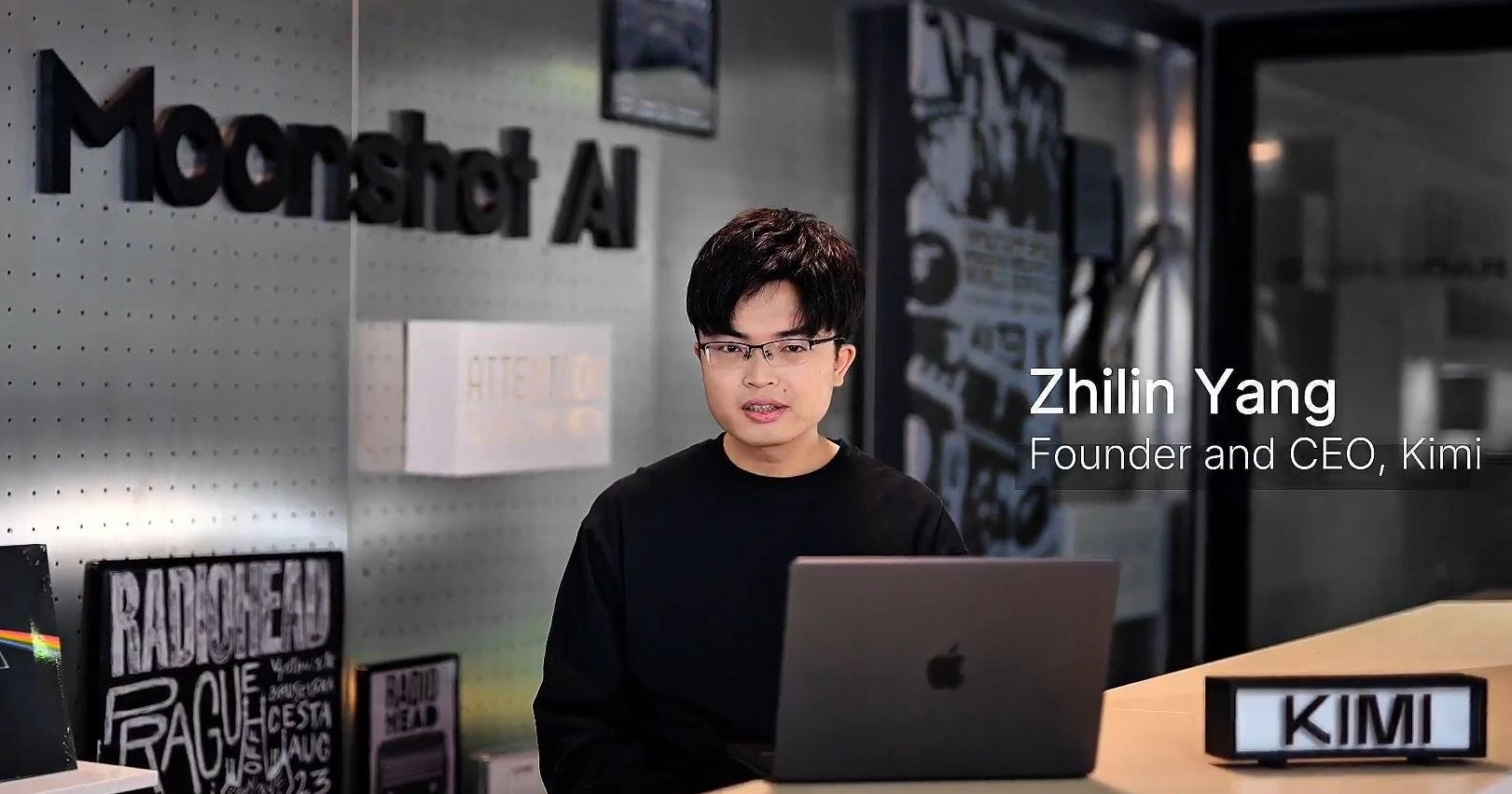
Markets largely failed to account for Moonshot founder Yang Zhilin. He graduated first in his class at Tsinghua University before completing a machine learning PhD at Carnegie Mellon in under four years. He studied there under Ruslan Salakhutdinov. During that time, Zhilin co-authored foundational transformer research including Transformer-XL and XLNet. He completed stints at Google Brain and Meta. Stanford and MIT offered him postdoctoral positions, and Apple tried to hire him. He chose to return to China instead. He wanted to build his own company rather than publish academic papers. Current discussions on the platform X highlight how the American F-1 visa system caters strictly to employees rather than ambitious founders. In March 2023, Zhilin launched Moonshot alongside two former Tsinghua schoolmates. They named the startup to honor the fiftieth anniversary of Pink Floyd’s album The Dark Side of the Moon. The team set artificial general intelligence as their primary goal.
The Future of Frontier AI Development
The Kimi K3 release demonstrates a clear market reality. Advanced artificial intelligence capabilities are turning into common commodities much faster than current startup valuations suggest. Over the next decade, the biggest winners will not necessarily be the research labs designing the most elegant algorithms. The companies that secure computing power, control distribution channels, and capture the customer base will dominate the market.
Disclaimer:
All views expressed are my own and are provided solely for informational and educational purposes. This is not investment, legal, tax, or accounting advice, nor a recommendation to buy or sell any security. While I aim for accuracy, I cannot guarantee completeness or timeliness of information. The strategies and securities discussed may not suit every investor; past performance does not predict future results, and all investments carry risk, including loss of principal.
I may hold, or have held, positions in any mentioned securities. Opinions herein are subject to change without notice. This material reflects my personal views and does not represent those of any employer or affiliated organization. Please conduct your own research and consult a licensed professional before making any investment decisions.