

A physics problem sits at the center of the artificial intelligence boom. Copper is reaching its limits. Electrical connections have moved data between computer chips for decades. But at the speeds needed for modern AI, copper struggles. When data moves at 1.6 terabits per second and beyond, copper cables generate too much heat. They consume huge amounts of power. They simply cannot move information fast enough. Every major technology company knows this.
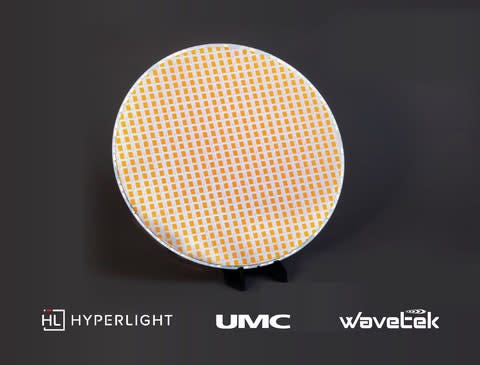
United Microelectronics Corporation, commonly known as UMC, quietly understands this too. In March 2026, the Taiwanese foundry partnered with HyperLight Corporation and its own subsidiary Wavetek. Together, they plan to mass-produce a technology called thin-film lithium niobate photonic chiplets. This technology changes the data pipeline. It moves away from electrical signals and switches to light.
This is a production update, not just a research project. HyperLight CEO Mian Zhang noted that the industry has waited a long time for a way to manufacture this at scale. He believes the days of this technology being a niche product are over.
Why Thin-Film Lithium Niobate Changes the Game
Thin-film lithium niobate, often called TFLN, is not a new material. Researchers have known for years that it handles optical signals better than standard silicon. It offers much higher bandwidth and loses less signal along the way. It also runs on standard chip voltages, so it does not need a separate power system.
The real challenge has always been making it. TFLN is very difficult to produce in large factories. HyperLight worked for years to solve this puzzle. They started with Wavetek on a 6-inch manufacturing line. Now, they are moving to 8-inch wafers at UMC facilities. This joint platform handles three main jobs at once. It works for short connections in data centers, long-distance telecommunications, and advanced chip packaging. It puts every optical need for an AI data center onto a single platform.
UMC Senior Vice President G.C. Hung stated that TFLN is a promising material to meet the massive bandwidth demands of future data centers.
The Race for Next-Generation Photonics
The competition in silicon photonics is heating up fast. Tower Semiconductor currently holds a strong lead. They already have $1.3 billion in signed photonics contracts for 2027. Customers have even paid $290 million upfront to secure space in their factories. During their first-quarter 2026 earnings call, Tower management noted their photonics factories are under intense pressure. Demand is simply growing faster than supply.
GlobalFoundries also made a major move. In November 2025, they spent $453 million to buy Advanced Micro Foundry in Singapore. This instantly gave them a strong position in the market. Their management team expects photonics revenue to pass $1 billion by 2028.
Then there is UMC. This company is taking a highly ambitious technical path. Tower currently works with 200mm wafers and is trying to scale up. UMC is aiming straight for 12-inch, or 300mm, silicon photonics. They secured a licensing deal in December 2025 with the imec iSiPP300 platform to make this happen. Jason Wang mentioned on their fourth-quarter 2025 call that while competitors focus on 8-inch wafers, UMC believes the 12-inch size will give them a distinct edge.
UMC also built its TFLN capability over several years with Wavetek. The new HyperLight partnership gives them a commercially ready platform that rivals do not currently have. Having a production-ready TFLN line offers a unique advantage in materials.
Looking Ahead at Management Expectations
During the fourth-quarter 2025 earnings call, analysts asked Jason Wang about future growth. They wanted to know if advanced packaging and silicon photonics could eventually make up 5 to 10 percent of company revenue. Wang gave a clear response, stating he expects more than that.
He also shared that UMC is working with over 10 customers on these projects. They expect more than 20 new chip designs to finalize in 2026. According to management, the financial impact becomes significant in 2027. This timeline highlights 2026 as a year of testing and final designs, followed by actual production volume the next year.
Wang also dropped a hint about future uses. He noted this photonics platform will eventually support other applications, including quantum computing. This is a detail the broader market is just starting to explore.
Market Position and Global Manufacturing
Financial observers are starting to notice UMC for a few distinct reasons. The company currently trades at a forward price-to-earnings ratio of about 13x. This sits lower than the broader semiconductor average of 20 to 30x.
A big part of their physical footprint is in Singapore. This gives global supply chains a rare manufacturing option outside of China and the United States. Automakers and technology giants are actively looking for this kind of geographic diversity for their 2025 to 2027 plans. UMC is expanding its Singapore factory, with mass production scheduled for the second half of 2026. Several large clients have already built this capacity into their long-term plans.
The broader industry is also watching for consolidation. In April 2025, reports surfaced about early talks of a potential $37 billion merger between UMC and GlobalFoundries. While no deal happened, the idea makes strategic sense. A combined company would have a massive footprint in mature chip manufacturing. It would offer worldwide locations that few others could match.
The Shift Toward Optical Infrastructure
UMC is not trying to compete with giants like TSMC on the absolute smallest, most advanced chips. Instead, they are focusing on the infrastructure that connects everything together. They are building the optical links and advanced packaging that make massive AI networks possible.
The industry demand for this technology is clear. Tower seeing massive prepayments shows it. GlobalFoundries spending $453 million on an acquisition shows it.
UMC has secured a unique technical spot in this growing field. They are combining TFLN materials, silicon photonics, and 12-inch advanced packaging into one system. Copper cables are hitting their physical limits. Light is the path forward, and the industry is building the factories to prove it.
Disclaimer:
All views expressed are my own and are provided solely for informational and educational purposes. This is not investment, legal, tax, or accounting advice, nor a recommendation to buy or sell any security. While I aim for accuracy, I cannot guarantee completeness or timeliness of information. The strategies and securities discussed may not suit every investor; past performance does not predict future results, and all investments carry risk, including loss of principal.
I may hold, or have held, positions in any mentioned securities. Opinions herein are subject to change without notice. This material reflects my personal views and does not represent those of any employer or affiliated organization. Please conduct your own research and consult a licensed professional before making any investment decisions.