

Q2 Earnings Put the AI Demand Debate to Rest
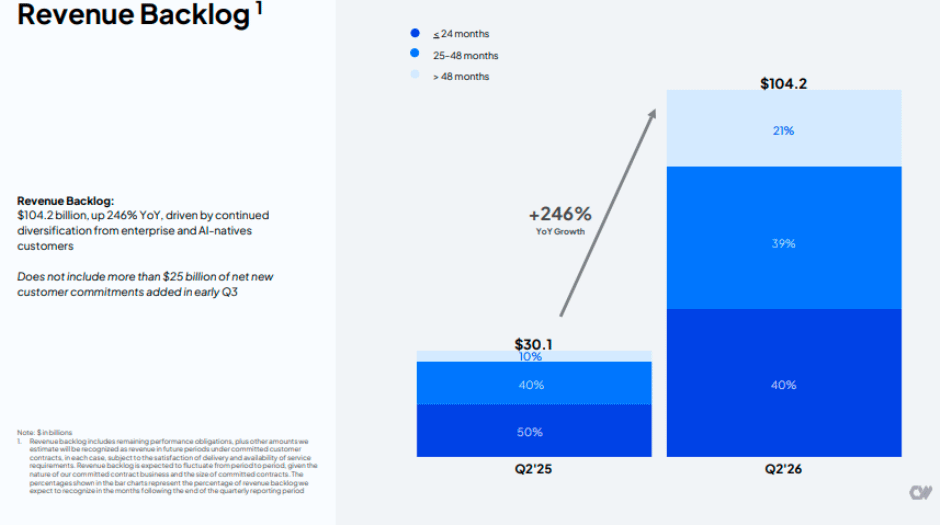
CoreWeave just reported second quarter results that answer lingering questions about artificial intelligence demand. Revenue reached $2.6 billion. That is a 112% increase year over year. The backlog gives a clearer picture of the future. This metric tracks multi year compute contracts. It recently surged to $104 billion, marking a 246% jump. Those numbers do not even include the $25 billion in new commitments signed during the first few weeks of the third quarter. Management raised their guidance across the board. They now target $12.4 to $13.2 billion in full year revenue and expect an exit run rate above $18.5 billion.
Older GPUs Are Securing Long Term Contracts
During the earnings call, management noted that demand continues to exceed supply across sectors, geographies and generations of infrastructure. That last point deserves attention. CoreWeave recently signed new contracts for its 2020 era A100 chips. Those agreements stretch all the way to 2029 at attractive prices. Market skeptics often argue that graphics processing units are short lived assets that lose value rapidly. The real world data tells a different story. Customers are happily signing five year deals for five year old silicon.
Transforming Compute Into an Investable Asset Class
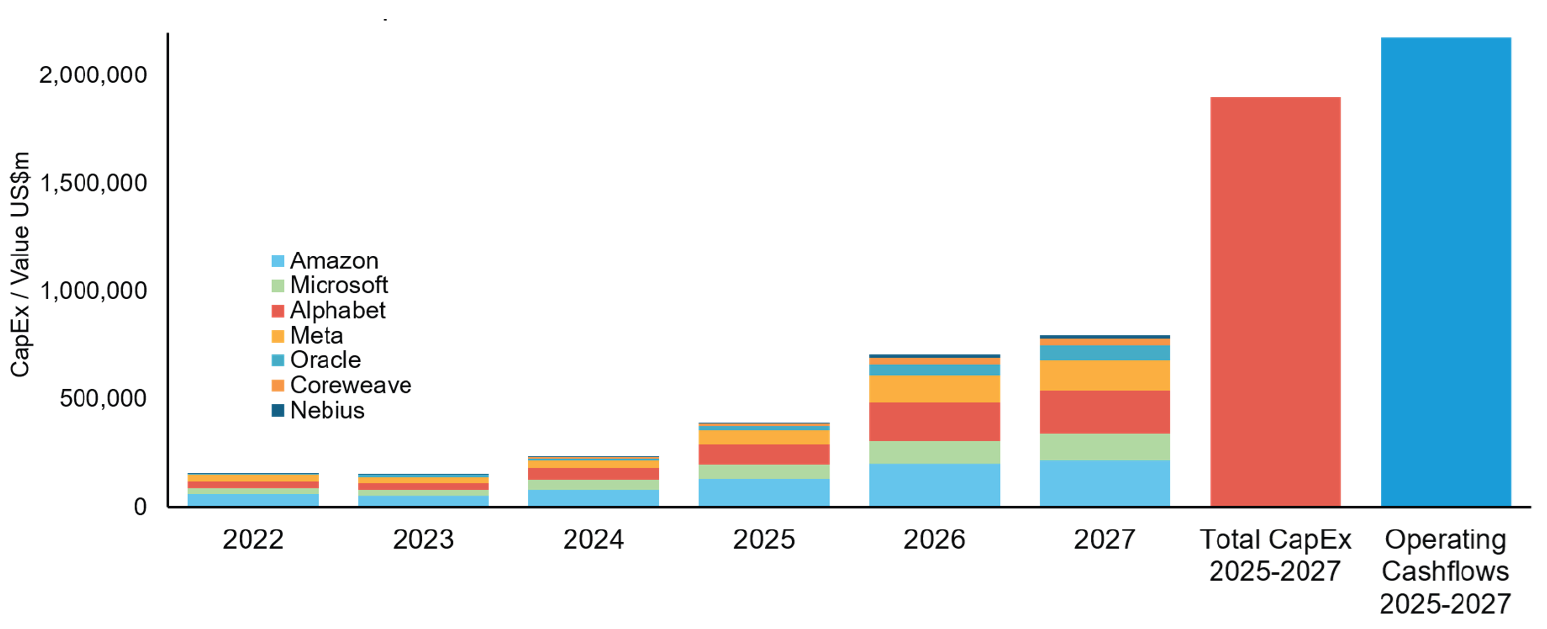
Nvidia took a massive step on August 10. Jensen Huang announced a financing coalition featuring Apollo, BlackRock, Blackstone, Brookfield, Goldman Sachs and KKR. Together, they plan to mobilize over half a trillion dollars for artificial intelligence infrastructure. Huang framed compute as a new kind of investable asset class. You can finance a massive data center the exact same way you fund a power plant or a major toll road. The infrastructure generates predictable, contracted cash flows over long periods. CoreWeave built its entire business model on this exact premise. Wall Street is now stepping in to fund it at an unprecedented scale.
The $6.3 Billion Nvidia Backstop
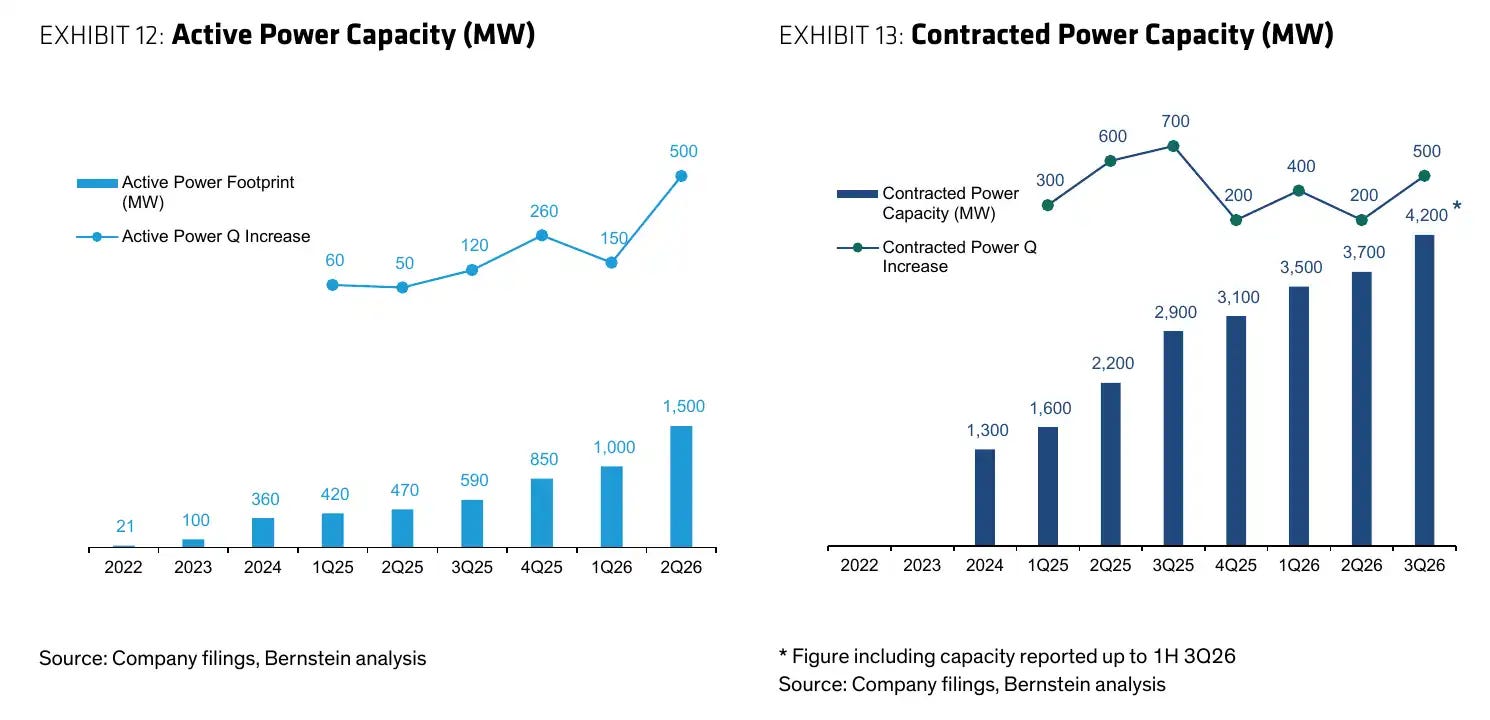
A deep partnership with Nvidia protects the CoreWeave business model. Nvidia holds a direct equity stake in the company. They are also contractually required to purchase any unsold CoreWeave capacity through April 2032 under a $6.3 billion backstop agreement. CoreWeave definitely carries substantial debt. Interest expenses hit $640 million in the second quarter alone. The structure of that debt is the key detail. The borrowing is tied to specific assets and front loaded against capital expenditures. Once a new server cluster goes live and begins processing workloads, the contracted revenue repays the loan. A fully underwritten five year contract eliminates the leverage on that specific cluster. Everything that follows becomes free cash flow. The Nvidia backstop acts as an insurance policy. It gives massive institutional lenders the confidence they need to extend credit in the first place.
The Rise of Independent Clouds Against Walled Gardens
Major cloud providers like Google, Amazon, Microsoft and Meta are actively building their own custom silicon. They are deploying TPUs, Trainium, Maia and MTIA. Observers often view this trend as a negative indicator for Nvidia. The reality of the market is quite different. Hyperscaler custom chips live entirely inside proprietary walled gardens. They only run internal workloads on specific software stacks. The actual Nvidia customer base includes AI labs, large enterprises, government agencies and sovereign clouds. These groups refuse to be locked into Amazon or Google hardware. They demand neutral, CUDA native compute environments they can control and move freely. Independent cloud providers like CoreWeave, Nebius and IREN exist to fill this exact void. As big tech companies build closed ecosystems, Nvidia relies on independent partners to keep its hardware the global default standard. The $104 billion CoreWeave backlog shows this strategy working at a massive scale.
Disclaimer:
All views expressed are my own and are provided solely for informational and educational purposes. This is not investment, legal, tax, or accounting advice, nor a recommendation to buy or sell any security. While I aim for accuracy, I cannot guarantee completeness or timeliness of information. The strategies and securities discussed may not suit every investor; past performance does not predict future results, and all investments carry risk, including loss of principal.
I may hold, or have held, positions in any mentioned securities. Opinions herein are subject to change without notice. This material reflects my personal views and does not represent those of any employer or affiliated organization. Please conduct your own research and consult a licensed professional before making any investment decisions.